
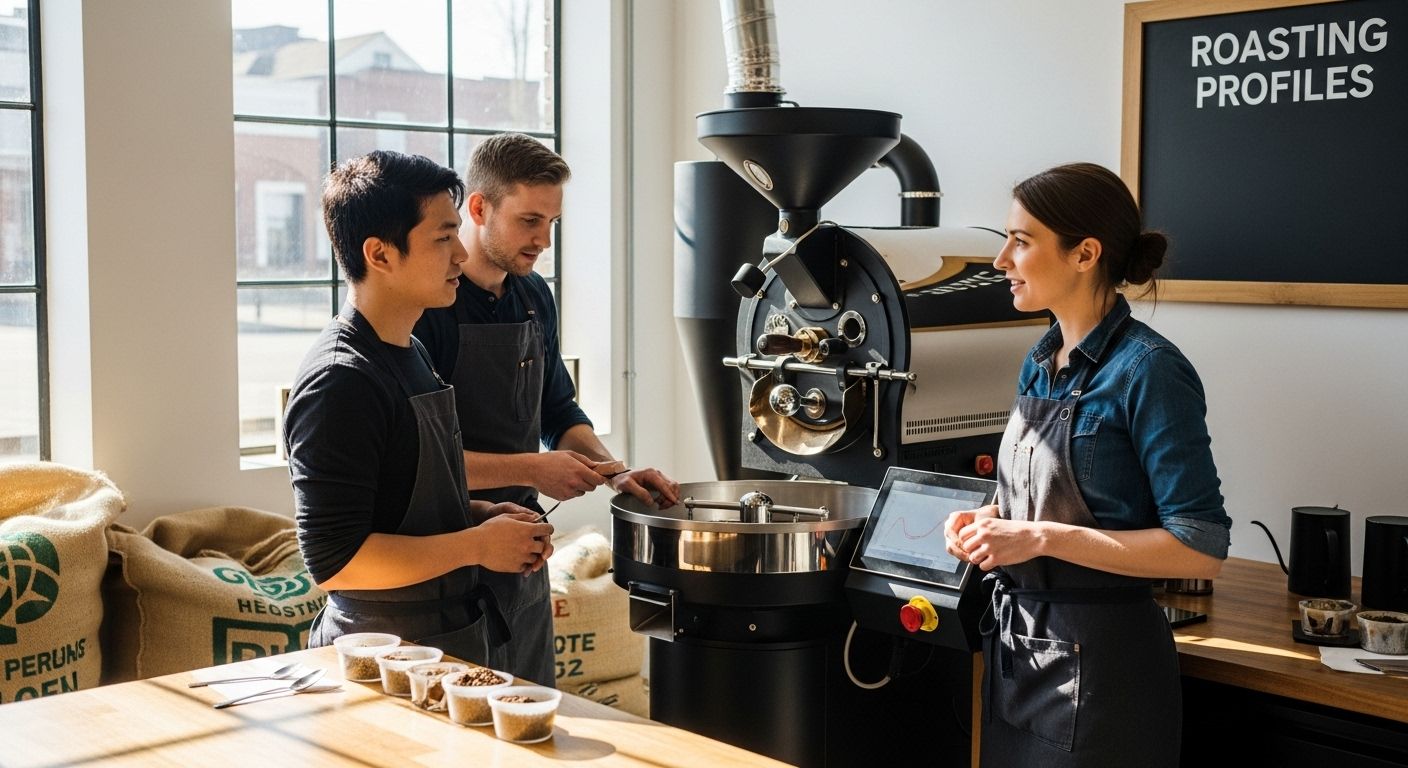
Roast profile decisions fundamentally shape signature blend character—determining which flavors develop, how components integrate, and what balance the final cup achieves. The same green coffee components blended in identical ratios produce dramatically different results depending on how they are roasted. Mastering roast profile development for blends represents an essential competency that distinguishes professional blend creators from amateur experimenters.
The foundational choice in blend roasting involves pre-blend versus post-blend approaches. Pre-blending combines green coffees before roasting, subjecting all components to identical heat treatment. Post-blending roasts components separately, then combines the finished products. Each approach has advantages and limitations that make it appropriate for different blend concepts and operational contexts.
Pre-blending simplifies production—one roast instead of multiple, one inventory item instead of several. For blends whose components have similar density, moisture, and optimal development requirements, pre-blending can produce excellent results efficiently. However, when components differ significantly in physical characteristics or optimal development, pre-blending forces compromises. A high-density Ethiopian and a low-density Brazilian require different heat application for optimal development; pre-blending produces a profile that optimally serves neither.
Post-blending enables component-specific optimization. Each coffee can be roasted to its ideal development level, with profiles tailored to extract its best contribution to the blend. An Ethiopian component roasted lighter to preserve brightness can combine with a Brazilian component roasted darker to develop body. This optimization produces superior results when components have divergent requirements but increases production complexity and inventory management burden.
I use post-blending for most specialty signature blends where quality optimization justifies added complexity, reserving pre-blending for blends with compatible components or production contexts where simplification matters more than optimization. The choice should follow from specific blend requirements rather than default preference.
Roast development level—how far chemical transformation proceeds during roasting—profoundly affects flavor character. Light development preserves origin character and acidity while leaving some compounds underdeveloped. Medium development balances origin preservation with developed sweetness and body. Dark development emphasizes roast-derived flavors while diminishing origin distinction. Signature blends can target any development level depending on intended character.
I approach development level as a creative choice rather than quality hierarchy. A blend intended to showcase origin complexity benefits from lighter development that preserves distinctive characteristics. One intended to provide rich, familiar comfort might target darker development that emphasizes chocolate and caramel. Neither is objectively superior; appropriateness depends on intended character and target consumer preference.
Within development level, specific profile parameters shape how development occurs. Rate of rise during roasting—how quickly temperature increases—affects flavor development independent of final temperature or time. Faster development tends to produce brighter, more dynamic results; slower development tends to produce smoother, more integrated results. Airflow adjustments affect heat transfer efficiency and also influence flavor. These parameters provide fine-tuning capability that development level alone does not offer.
I develop roast profiles through systematic experimentation. Starting from initial parameters based on coffee characteristics and target profile, I roast multiple variations adjusting individual parameters while holding others constant. Cupping each variation against the target profile reveals which adjustments move toward or away from the goal. This methodical approach is more efficient than random exploration and produces documented understanding of how parameters affect this specific blend.
Blend interaction effects complicate roast profile development. The same component roasted identically produces different contribution depending on what other components it combines with. A coffee that provides brightness in one blend might not in another because the other components interact differently. These interaction effects mean that component profiles optimized individually may not produce optimal blended results. Final validation must evaluate the combined blend, not just individual components.
I conduct final cupping of blended profiles even after optimizing component profiles individually. Sometimes adjustments that improve the blend differ from what would optimize components in isolation. Being willing to deviate from component optimization for blend optimization produces better final results.
Consistency across production batches requires documented profiles and process control. The profile that achieved target character during development must be reproduced reliably in production. This requires recording all relevant parameters—charge temperature, turning point, rate of rise targets, development time, drop temperature—and monitoring production roasts against these targets.
I implement statistical process control approaches for blend roasting. Tracking key metrics across batches, establishing acceptable variation ranges, and responding when metrics exceed those ranges enables consistency that informal monitoring cannot achieve. A production roast that hits target parameters within tolerance has high probability of matching target cup character; one that deviates significantly warrants cupping verification before release.
Seasonal adjustment of roast profiles maintains blend character as components evolve. Fresh crop coffee behaves differently than aged crop; moisture content changes affect heat transfer; density variation affects development timing. Profiles that worked in January may need modification by June. Ongoing monitoring and adjustment, guided by cupping against target references, maintains consistency despite component evolution.
I establish baseline profiles at the start of each crop year after component evaluation, then monitor for drift and adjust as needed throughout the season. This proactive approach catches character drift before it becomes noticeable to consumers rather than reacting after complaints emerge.
Equipment capabilities constrain profile possibilities. Different roasters—drum versus fluid bed, direct versus indirect flame, varying batch sizes—produce different flavor development from identical profiles. A profile developed on one roaster may not translate directly to another. Understanding how your specific equipment shapes flavor enables profile optimization within its capabilities rather than fighting against them.
My conclusion from years of blend roast profile development is that roasting represents creative opportunity, not just technical execution. The roaster's choices determine whether green coffee's potential manifests as intended or gets lost in inappropriate development. Profile development for signature blends requires understanding component characteristics, having clear target profile vision, employing systematic experimentation, and implementing reliable production processes. When all these elements align, roasting transforms quality components into distinctive blends that fulfill their creative promise.

Daniel Carter
Emma Johnson is a coffee expert with years of experience in brewing techniques, coffee culture, and the global coffee industry. She has extensive knowledge of coffee origins, roasting methods, equipment, and preparation practices, and regularly shares insights, guides, and tips to help enthusiasts and beginners enhance their coffee experience.
You Might Also Like
Comments
-
 Reply
ReplyDaniel Carter
Jun 23, 2025, 11:45 am
I’ve been experimenting with different brewing methods for a few months, and this guide really helped me understand the nuances between pour-over and French press. The tips on water temperature and grind size were especially useful. Thanks for sharing such a detailed article!
-
 Reply
ReplyRonda Otoole
Jun 23, 2025, 11:45 am
As a beginner, I often struggle with choosing the right coffee beans. This post broke down the flavor profiles clearly and gave practical advice on selecting beans based on taste preferences. I feel much more confident in my next purchase now.
 Reply
ReplyJames Whitley
Jun 23, 2025, 11:45 am
Loved the section about sustainable coffee practices! It’s great to see articles that not only focus on brewing but also educate readers on ethical sourcing and environmental impact. Definitely inspired me to try beans from local fair-trade roasters.
-
 Reply
ReplyKimberly Chretien
Jun 23, 2025, 11:45 am
I tried some of the latte art tips from this blog, and even though I’m still a beginner, my coffee looks way better now. The step-by-step instructions and real-world examples made it really easy to follow. Can’t wait to try more techniques!
-
 Reply
ReplyDaniel Carter
Jun 23, 2025, 11:45 am
I really appreciate how this post explains coffee concepts in a simple, approachable way. The breakdown of aroma, acidity, and body helped me understand why different coffees taste the way they do. It’s the kind of article I’ll come back to whenever I try a new bean.