

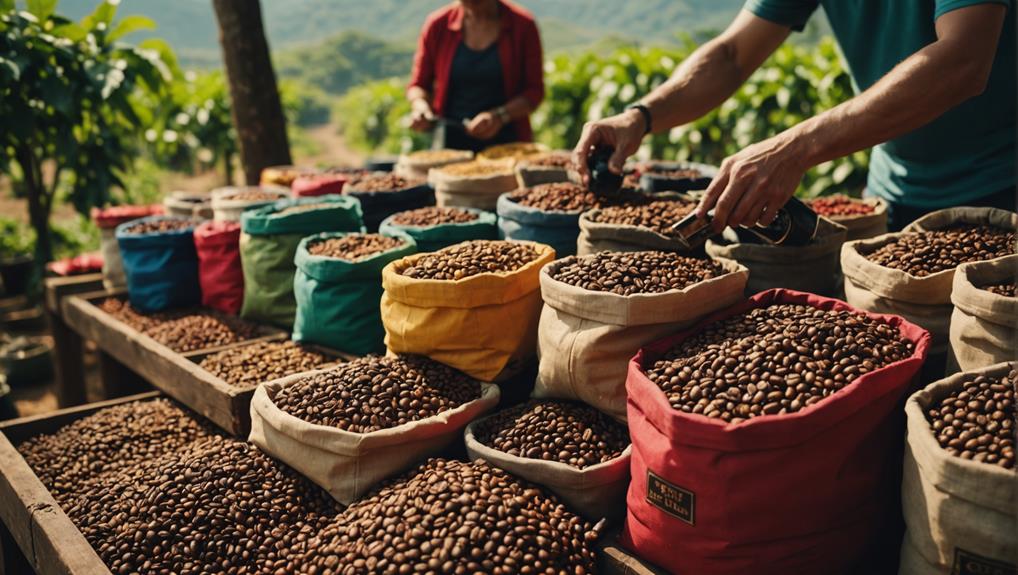
Sourcing represents the foundation upon which signature blend excellence is built—the decisions made about what green coffee to acquire determine what flavor possibilities exist and what consistency can be achieved. Having developed sourcing strategies for numerous blend programs, I examine the approaches that enable acquiring components worthy of signature blend inclusion.
The sourcing perspective for blends differs fundamentally from single origin sourcing. Single origin buyers seek exceptional individual coffees that can stand alone; blend sourcers seek components that contribute effectively to combination. An exceptional single origin might be wrong for a blend if its characteristics do not serve blend architecture; a modest coffee might be perfect if it provides exactly what the blend needs. This contribution orientation shapes every sourcing decision.
I approach blend sourcing with explicit contribution requirements derived from blend objectives. What characteristics must components provide? What acidity profile is needed? What body foundation? What aromatic enhancement? These requirements translate blend vision into sourcing criteria that guide selection toward coffees that serve blend success rather than individual excellence.
Quality floor establishment ensures that all components meet minimum standards regardless of their specific contribution role. A component that provides excellent body but contains defects that produce off-flavors undermines blend quality even if its intended contribution is achieved. Quality floors prevent problematic coffees from entering blend consideration regardless of other attributes.
I establish quality floors through cupping score minimums, defect tolerances, and processing quality requirements. Every potential component must clear these thresholds before contribution-specific evaluation begins. This quality filtration ensures that blend consideration focuses on coffees capable of contributing positively rather than wasting evaluation resources on problematic lots.
Contribution-specific evaluation assesses whether coffees that pass quality floors actually provide needed characteristics. Does this coffee deliver the acidity character the blend requires? Does it provide body foundation that supports other elements? Does it contribute aromatics that enhance overall complexity? These contribution questions guide selection among quality-acceptable options.
I evaluate potential components against explicit contribution criteria, rating how well each coffee delivers needed characteristics. This evaluation produces rankings that identify which coffees best serve specific blend roles rather than generic quality rankings that might not predict blend contribution. Contribution-focused evaluation produces better component selection than quality-only evaluation.
Consistency assessment evaluates whether component characteristics remain stable across production volumes and seasonal transitions. A coffee that delivers excellent contribution in sample evaluation but varies significantly in production lots undermines blend consistency. Consistency capability is as important as contribution quality for blend success.
I assess consistency through historical performance analysis where available and through lot-to-lot variation evaluation for new sources. Suppliers with demonstrated consistency records receive preference over those with unknown or problematic consistency. This consistency orientation protects blend reliability that quality-only focus might compromise.
Relationship quality affects sourcing outcomes beyond individual transaction assessment. Suppliers who communicate proactively, represent quality honestly, and respond effectively to problems provide value that transactional analysis cannot capture. These relationship qualities affect long-term sourcing success.
I invest in supplier relationships that demonstrate partnership orientation rather than purely transactional engagement. Regular communication, feedback sharing, and collaborative problem-solving build relationships that deliver better long-term outcomes than aggressive negotiation with interchangeable suppliers. Relationship investment produces sourcing advantages that spot-market purchasing cannot match.
Origin diversification manages risk while maintaining contribution consistency. Dependence on single sources for critical contributions creates vulnerability to supply disruption; diversified sourcing provides alternatives when primary sources disappoint. However, diversification must maintain contribution consistency rather than sacrificing character for security.
I develop backup sources for critical blend contributions, identifying alternative origins or suppliers that can provide needed characteristics if primary sources become unavailable. These backups require evaluation and relationship development before they are needed; crisis moments do not allow sourcing development time. Proactive diversification provides options that reactive sourcing cannot.
Ethical considerations increasingly influence sourcing decisions and consumer perception. Sourcing from producers using exploitative labor practices, environmentally destructive methods, or economically unsustainable pricing creates ethical and reputational risk regardless of coffee quality. Ethical sourcing protects both values and brand.
I evaluate sourcing ethics through producer relationship assessment, certification verification, and supply chain transparency investigation. Preferred sources demonstrate commitment to fair labor practices, environmental responsibility, and economically sustainable relationships. This ethical orientation increasingly aligns with consumer expectations while reflecting genuine values commitment.
Cost management ensures that sourcing serves commercial viability alongside quality objectives. Components that deliver excellent contribution but cost more than blend pricing can recover undermine program sustainability. Sourcing must balance quality achievement with economic reality.
I evaluate sourcing decisions through landed cost analysis that accounts for all acquisition costs—green price, shipping, insurance, duties, financing—rather than FOB price alone. This comprehensive cost view enables accurate margin calculation and prevents surprises that disrupt commercial viability. Cost-informed sourcing serves sustainable blend programs.
Documentation captures sourcing knowledge for consistency and improvement. Recording source information, evaluation results, relationship notes, and performance history creates institutional knowledge that survives personnel changes and enables pattern identification. Undocumented sourcing knowledge eventually dissipates; documented knowledge accumulates.
I maintain comprehensive sourcing records including supplier profiles, component evaluations, purchase history, quality performance, and relationship notes. Periodic review of accumulated records identifies patterns that inform future sourcing decisions—reliable sources, problematic origins, effective negotiation approaches. This systematic documentation transforms sourcing from repeated discovery to continuous improvement.
My conclusion from developing blend sourcing strategies is that sourcing excellence requires systematic approaches that serve blend objectives specifically. The techniques that work—contribution-focused evaluation, consistency assessment, relationship investment, diversification planning, ethical consideration, cost management, and comprehensive documentation—represent investment in capabilities that distinguish successful blend programs. Blend programs that master strategic sourcing access component quality that opportunistic purchasing cannot reliably provide.

Sophia Reynolds
Emma Johnson is a coffee expert with years of experience in brewing techniques, coffee culture, and the global coffee industry. She has extensive knowledge of coffee origins, roasting methods, equipment, and preparation practices, and regularly shares insights, guides, and tips to help enthusiasts and beginners enhance their coffee experience.
You Might Also Like
Comments
-
 Reply
ReplySophia Reynolds
Jun 23, 2025, 11:45 am
I’ve been experimenting with different brewing methods for a few months, and this guide really helped me understand the nuances between pour-over and French press. The tips on water temperature and grind size were especially useful. Thanks for sharing such a detailed article!
-
 Reply
ReplyRonda Otoole
Jun 23, 2025, 11:45 am
As a beginner, I often struggle with choosing the right coffee beans. This post broke down the flavor profiles clearly and gave practical advice on selecting beans based on taste preferences. I feel much more confident in my next purchase now.
 Reply
ReplyJames Whitley
Jun 23, 2025, 11:45 am
Loved the section about sustainable coffee practices! It’s great to see articles that not only focus on brewing but also educate readers on ethical sourcing and environmental impact. Definitely inspired me to try beans from local fair-trade roasters.
-
 Reply
ReplyKimberly Chretien
Jun 23, 2025, 11:45 am
I tried some of the latte art tips from this blog, and even though I’m still a beginner, my coffee looks way better now. The step-by-step instructions and real-world examples made it really easy to follow. Can’t wait to try more techniques!
-
 Reply
ReplySophia Reynolds
Jun 23, 2025, 11:45 am
I really appreciate how this post explains coffee concepts in a simple, approachable way. The breakdown of aroma, acidity, and body helped me understand why different coffees taste the way they do. It’s the kind of article I’ll come back to whenever I try a new bean.