

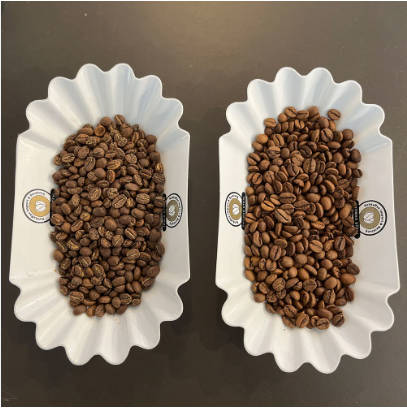
Having worked as both a green coffee buyer and a head roaster, I have spent years navigating the practical and philosophical differences between single origin coffees and blends. This article is not written to declare one superior to the other, but to clarify their fundamentally different purposes, strengths, and limitations from a professional standpoint.
Single origin coffees are designed to express specificity. They showcase the unique characteristics of a place, season, and producer. In my experience evaluating harvests year after year, no two single origin lots are ever truly identical. This variability is not a flaw, but a feature. It reflects agricultural reality and provides transparency into how climate, processing, and human decisions shape flavor outcomes.
Blends, by contrast, are built for consistency. From an operational perspective, blends allow roasters to stabilize flavor profiles across seasons and price fluctuations. I have personally designed blends that rely on precise ratios of acidity, sweetness, and body to meet customer expectations. This requires deep technical skill and ongoing recalibration as component coffees change.
From a sensory analysis standpoint, single origin coffees excel in clarity. They allow tasters to isolate individual attributes—floral aromatics, citrus acidity, mineral structure—without interference. This is why they dominate competitions, educational settings, and specialty menus. Blends, however, often outperform single origins in balance and approachability, especially for milk-based beverages.
Economically, single origin sourcing can benefit farmers through higher premiums, but it also introduces risk. Crop failure or quality variation directly impacts buyers. Blends distribute this risk across multiple origins. Having negotiated contracts on both sides, I view these models as complementary rather than competitive.
My conclusion is grounded in experience: single origin coffees are best understood as educational and expressive tools, while blends are functional and consumer-oriented. A mature coffee program respects both, using each intentionally rather than ideologically.

Daniel Carter
Emma Johnson is a coffee expert with years of experience in brewing techniques, coffee culture, and the global coffee industry. She has extensive knowledge of coffee origins, roasting methods, equipment, and preparation practices, and regularly shares insights, guides, and tips to help enthusiasts and beginners enhance their coffee experience.
You Might Also Like
Comments
-
 Reply
ReplyDaniel Carter
Jun 23, 2025, 11:45 am
I’ve been experimenting with different brewing methods for a few months, and this guide really helped me understand the nuances between pour-over and French press. The tips on water temperature and grind size were especially useful. Thanks for sharing such a detailed article!
-
 Reply
ReplyRonda Otoole
Jun 23, 2025, 11:45 am
As a beginner, I often struggle with choosing the right coffee beans. This post broke down the flavor profiles clearly and gave practical advice on selecting beans based on taste preferences. I feel much more confident in my next purchase now.
 Reply
ReplyJames Whitley
Jun 23, 2025, 11:45 am
Loved the section about sustainable coffee practices! It’s great to see articles that not only focus on brewing but also educate readers on ethical sourcing and environmental impact. Definitely inspired me to try beans from local fair-trade roasters.
-
 Reply
ReplyKimberly Chretien
Jun 23, 2025, 11:45 am
I tried some of the latte art tips from this blog, and even though I’m still a beginner, my coffee looks way better now. The step-by-step instructions and real-world examples made it really easy to follow. Can’t wait to try more techniques!
-
 Reply
ReplyDaniel Carter
Jun 23, 2025, 11:45 am
I really appreciate how this post explains coffee concepts in a simple, approachable way. The breakdown of aroma, acidity, and body helped me understand why different coffees taste the way they do. It’s the kind of article I’ll come back to whenever I try a new bean.