
Selecting single origin lots for commercial roasting programs requires balancing multiple considerations that extend well beyond cup quality alone. Having managed lot selection for specialty roasters across different scales and market positions, I have developed frameworks that integrate sensory evaluation, operational requirements, commercial realities, and strategic positioning. This guidance helps roasters make selection decisions that serve their specific programs.
The selection process begins with understanding program requirements. A single origin slot in a roaster's lineup serves specific functions: perhaps showcasing exceptional quality, demonstrating origin commitment, providing exploration options for adventurous consumers, or anchoring a subscription program. Different functions require different characteristics; clarifying the role a selection will play focuses evaluation criteria.
A flagship single origin that represents the roaster's quality standard requires exceptional cup quality, reasonable consistency across production volumes, and story value that supports premium positioning. A rotating exploration offering prioritizes distinctiveness over consistency; consumers expect variety and novelty. A subscription anchor needs reliable quality and availability across multiple shipments. These different functions generate different evaluation frameworks.
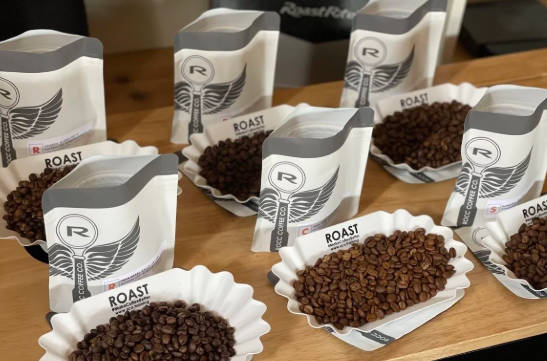
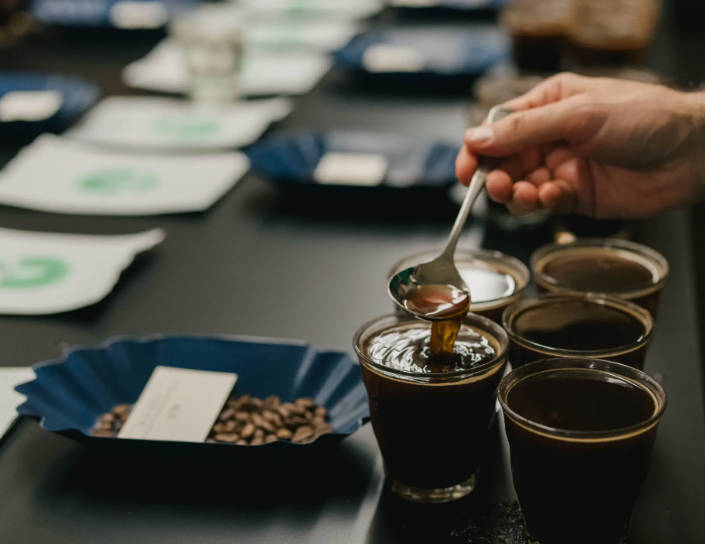
Sensory evaluation provides the foundation for lot selection but must be conducted appropriately. Sample evaluation should use protocols that approximate how the coffee will be consumed—if the offering targets filter brewing, evaluate with filter methods; if espresso, evaluate as espresso. Cupping protocols reveal comparative quality but may not predict application performance; method-specific evaluation addresses this gap.
I evaluate potential lots multiple times before committing. Initial cupping screens out coffees that obviously fail to meet quality thresholds; follow-up evaluation assesses those that pass initial screening under more demanding conditions. Testing across different roast profiles reveals whether the coffee expresses well across the roaster's typical development range or requires specific profile treatment.
Roastability assessment considers how a coffee will perform in production. Green characteristics—density, moisture content, screen size uniformity—affect roast behavior. High-density coffees require different heat application than lower-density ones; inconsistent screen sizes produce uneven roasts. Coffees that require extremely narrow roast parameters to express well may be exceptional in ideal conditions but problematic in production environments where variation inevitably occurs.
I have encountered coffees that cupped spectacularly as samples but proved difficult to roast consistently at production scale. The sample roast, carefully controlled and closely monitored, achieved results that busier production roasting could not replicate. Understanding a coffee's roast tolerance—how much parameter variation it can accept while still delivering acceptable results—helps predict production performance.
Availability and volume considerations shape selection practically. A coffee available in only five-bag quantities serves different programs than one available in fifty bags. A coffee available only briefly during harvest season serves differently than one with year-round availability. Matching coffee availability to program requirements prevents the frustration of selling out prematurely or being stuck with inventory that outlasts quality.
For ongoing programs, supply chain reliability matters alongside initial quality. A producer or importer with demonstrated track record for on-time delivery, accurate quality representation, and responsive communication provides different value than an unknown source with exceptional first-lot quality. The relationship infrastructure that enables smooth ongoing purchasing often outweighs marginal quality differences in initial evaluation.
Commercial viability must be realistic. A coffee that costs $8 per pound green cannot support a $15 retail price if the roaster's economics require 3x margin. Understanding landed cost, yield loss through roasting, and packaging and labor costs enables calculating whether a coffee can price appropriately for its quality positioning. Exceptional coffees that cannot be sold profitably do not serve commercial programs.
I calculate target retail pricing before committing to purchases, working backward from consumer willingness-to-pay to determine whether green cost allows sufficient margin. This discipline prevents acquiring coffees that prove impossible to sell at prices that work commercially.
Story value—the narrative elements that support marketing and consumer engagement—influences selection alongside sensory merit. A coffee from a producer with compelling story, from a region with consumer recognition, or with processing characteristics that interest curious consumers provides marketing support that generic quality cannot. Story value does not substitute for cup quality but multiplies the impact of quality that exists.
Differentiation within the program's existing lineup deserves consideration. A selection that duplicates characteristics already represented wastes a lineup slot; a selection that fills a gap—different origin, different processing, different flavor profile—expands what the program offers. I map potential selections against existing offerings to ensure each addition provides distinct value.
Risk assessment should be explicit. Experimental processing, unproven producers, and unfamiliar origins carry higher risk than established relationships with documented track records. This risk may be acceptable for small-volume exploration offerings but problematic for flagship positions where consistency matters. Matching risk level to program role prevents costly disappointments.
My selection process integrates these considerations through structured evaluation: sensory assessment across appropriate methods, roastability testing, commercial viability calculation, story value assessment, differentiation analysis, and risk evaluation. Coffees that pass all these screens merit selection; those that excel in some areas but fail others require judgment about whether strengths compensate for weaknesses.
My conclusion from years of lot selection experience is that systematic evaluation consistently outperforms intuitive selection. The coffees that succeed in commercial programs are those that satisfy multiple requirements simultaneously—not just exceptional cups but exceptional cups that roast consistently, price appropriately, tell compelling stories, and fit within lineup strategy. Developing and applying systematic selection frameworks produces better outcomes than falling in love with samples that prove problematic in practice.

Daniel Carter
Emma Johnson is a coffee expert with years of experience in brewing techniques, coffee culture, and the global coffee industry. She has extensive knowledge of coffee origins, roasting methods, equipment, and preparation practices, and regularly shares insights, guides, and tips to help enthusiasts and beginners enhance their coffee experience.
You Might Also Like
Comments
-
 Reply
ReplyDaniel Carter
Jun 23, 2025, 11:45 am
I’ve been experimenting with different brewing methods for a few months, and this guide really helped me understand the nuances between pour-over and French press. The tips on water temperature and grind size were especially useful. Thanks for sharing such a detailed article!
-
 Reply
ReplyRonda Otoole
Jun 23, 2025, 11:45 am
As a beginner, I often struggle with choosing the right coffee beans. This post broke down the flavor profiles clearly and gave practical advice on selecting beans based on taste preferences. I feel much more confident in my next purchase now.
 Reply
ReplyJames Whitley
Jun 23, 2025, 11:45 am
Loved the section about sustainable coffee practices! It’s great to see articles that not only focus on brewing but also educate readers on ethical sourcing and environmental impact. Definitely inspired me to try beans from local fair-trade roasters.
-
 Reply
ReplyKimberly Chretien
Jun 23, 2025, 11:45 am
I tried some of the latte art tips from this blog, and even though I’m still a beginner, my coffee looks way better now. The step-by-step instructions and real-world examples made it really easy to follow. Can’t wait to try more techniques!
-
 Reply
ReplyDaniel Carter
Jun 23, 2025, 11:45 am
I really appreciate how this post explains coffee concepts in a simple, approachable way. The breakdown of aroma, acidity, and body helped me understand why different coffees taste the way they do. It’s the kind of article I’ll come back to whenever I try a new bean.