

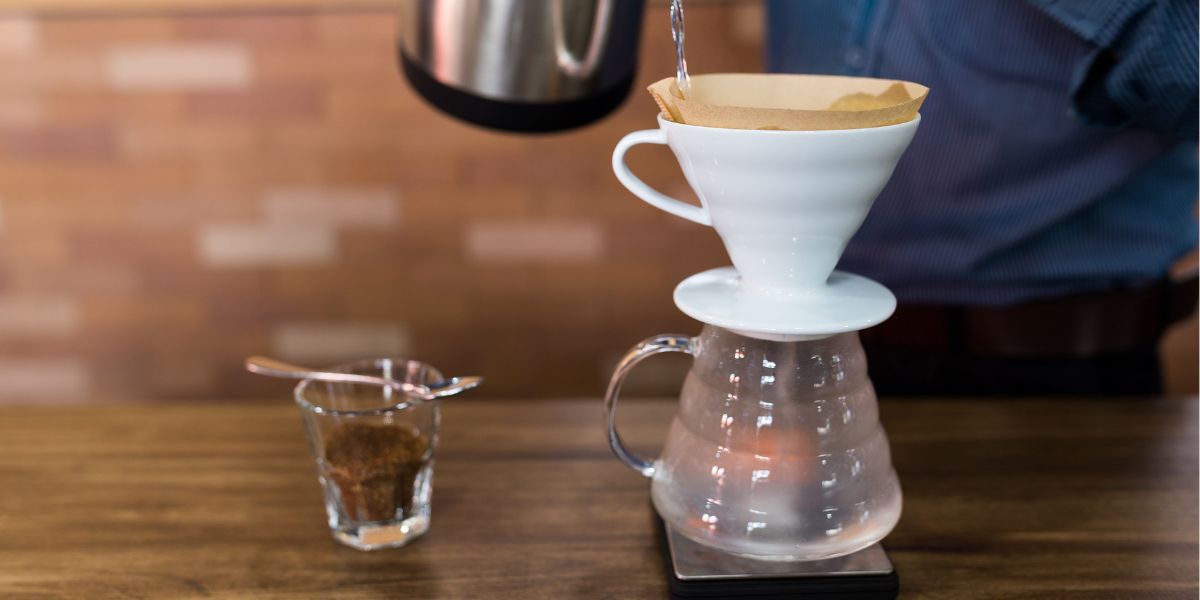
Pour-over brewing offers extensive technique variation within its fundamental framework—water poured over ground coffee in a filter. This variation enables extraction customization that produces diverse flavor profiles from the same coffee. Understanding pour-over technique variables and their effects enables professionals to develop distinctive approaches that highlight specific coffee characteristics.
The pour-over framework—ground coffee in a filter with gravity-driven water flow—appears simple but contains remarkable complexity. Water temperature, pour rate, pattern, intervals, and total time all affect extraction character. Each variable offers optimization opportunities.
I approach pour-over as a technique platform rather than a fixed method. The fundamental framework accommodates infinite variation; understanding variable effects enables intentional manipulation for desired outcomes. This perspective transforms pour-over from routine into creative practice.
Pulse pouring versus continuous pouring represents a fundamental technique choice. Pulse pouring—intervals of pour and drain—produces different extraction dynamics than continuous pouring. Each approach has characteristics that suit different coffees and goals.
I employ both pulse and continuous pouring based on coffee characteristics and target profile. Pulse pouring suits coffees where I want to emphasize clarity and definition; continuous pouring may better suit coffees where I want fuller body and integration.
Bloom duration affects initial extraction and overall evenness. Extended blooms allow more complete degassing and may produce more even subsequent extraction; shorter blooms preserve certain volatile compounds. Bloom timing merits deliberate attention.
I adjust bloom duration based on coffee freshness and roast level, extending blooms for very fresh or darker roasted coffees where more gas requires more degassing time. This intentional bloom management optimizes subsequent extraction.
Pour rate affects extraction rate and bed agitation. Faster pours agitate the bed more and may produce faster extraction; slower pours create gentler extraction with less agitation. Rate selection aligns with extraction goals.
I vary pour rate based on desired extraction character, using faster pours when I want more aggressive extraction and slower pours when I want gentler, more delicate extraction. This rate manipulation enables flavor customization.
Pour pattern affects extraction evenness and agitation distribution. Concentric circles distribute water and agitation evenly; center-focused pours concentrate both. Pattern selection shapes extraction character.
I develop pour patterns appropriate to specific goals, using even distribution for balanced extraction and targeted patterns when I want to emphasize certain characteristics. This pattern intentionality adds another optimization dimension.
Water temperature adjustments throughout brewing enable staged extraction. Beginning with higher temperatures for initial extraction then reducing for later stages produces different profiles than uniform temperature. Temperature staging offers advanced control.
I experiment with temperature staging for specific coffees, noting how temperature variation throughout brewing affects flavor development. This advanced technique requires careful documentation and systematic evaluation.
Agitation through stirring or swirling affects extraction rate and evenness. Some pour-over approaches incorporate deliberate agitation; others rely solely on pour-induced movement. Agitation decisions shape extraction dynamics.
I incorporate agitation deliberately when extraction goals require it, using stirring or swirling to accelerate extraction or improve evenness. This intentional agitation approach extends technique options beyond pour manipulation.
Drain time at brew completion affects final extraction. Allowing complete drain produces different results than removing brewer before drain completes. Drain management represents a final extraction variable.
I manage drain completion based on extraction goals, sometimes allowing complete drain for maximum extraction and sometimes removing brewer earlier for lighter extraction. This drain management adds final control over cup character.
Brewer selection affects all other variables. Different pour-over geometries—cone angle, filter type, drainage rate—interact with technique to produce characteristic results. Brewer choice shapes the technique framework.
I select brewers based on characteristics appropriate to specific coffees and goals. This brewer-coffee matching ensures that equipment supports rather than constrains technique optimization.
Recipe development through systematic variation reveals optimal approaches for specific coffees. Methodical adjustment of single variables while holding others constant identifies which manipulations most affect specific coffee characteristics.
I develop recipes through systematic experimentation, documenting all variables and sensory outcomes. This methodical approach transforms intuition into reproducible knowledge that enables consistent quality and informed variation.
Customer experience considerations guide technique selection. Complex techniques that produce exceptional results may not suit high-volume service; simpler approaches may sacrifice some quality for practicality. Context shapes technique choices.
I adapt pour-over technique to service context, employing more elaborate approaches when time permits and streamlined techniques when efficiency matters. This contextual adaptation ensures that technique serves customer experience.
My professional conclusion is that pour-over technique variation enables customized extraction that highlights specific coffee characteristics. Understanding variable effects and developing systematic approaches to recipe development transforms pour-over from standardized routine into creative craft that produces distinctive results.

Ethan Carter
Emma Johnson is a coffee expert with years of experience in brewing techniques, coffee culture, and the global coffee industry. She has extensive knowledge of coffee origins, roasting methods, equipment, and preparation practices, and regularly shares insights, guides, and tips to help enthusiasts and beginners enhance their coffee experience.
You Might Also Like
Comments
-
 Reply
ReplyEthan Carter
Jun 23, 2025, 11:45 am
I’ve been experimenting with different brewing methods for a few months, and this guide really helped me understand the nuances between pour-over and French press. The tips on water temperature and grind size were especially useful. Thanks for sharing such a detailed article!
-
 Reply
ReplyRonda Otoole
Jun 23, 2025, 11:45 am
As a beginner, I often struggle with choosing the right coffee beans. This post broke down the flavor profiles clearly and gave practical advice on selecting beans based on taste preferences. I feel much more confident in my next purchase now.
 Reply
ReplyJames Whitley
Jun 23, 2025, 11:45 am
Loved the section about sustainable coffee practices! It’s great to see articles that not only focus on brewing but also educate readers on ethical sourcing and environmental impact. Definitely inspired me to try beans from local fair-trade roasters.
-
 Reply
ReplyKimberly Chretien
Jun 23, 2025, 11:45 am
I tried some of the latte art tips from this blog, and even though I’m still a beginner, my coffee looks way better now. The step-by-step instructions and real-world examples made it really easy to follow. Can’t wait to try more techniques!
-
 Reply
ReplyEthan Carter
Jun 23, 2025, 11:45 am
I really appreciate how this post explains coffee concepts in a simple, approachable way. The breakdown of aroma, acidity, and body helped me understand why different coffees taste the way they do. It’s the kind of article I’ll come back to whenever I try a new bean.