

Flavor profile mastery represents the culmination of coffee professional development—the ability to perceive, articulate, and work with the full range of sensory characteristics that single origin coffees can express. This mastery enables better purchasing decisions, more effective roast development, more compelling consumer communication, and deeper personal appreciation. Having developed flavor profile expertise over years of professional practice, I share frameworks and approaches that accelerate the journey from basic tasting to sophisticated sensory analysis.
Understanding flavor profile components establishes the analytical foundation. Coffee flavor comprises multiple dimensions that can be evaluated independently before considering their integration. Aroma includes both dry fragrance (ground coffee before water contact) and wet aroma (during and after brewing). Taste encompasses the basic taste qualities—sweetness, acidity, bitterness, and sometimes saltiness or umami. Flavor combines taste and retronasal aroma into the complex perception we experience while drinking. Mouthfeel describes tactile sensations—body weight, texture, astringency. Aftertaste captures what persists after swallowing.
Developing discrimination within each dimension builds analytical capacity. Acidity, for instance, is not simply present or absent, strong or weak—it has type, quality, and integration. Citric acidity (lemon-like, sharp) presents differently from malic acidity (apple-like, rounded), which presents differently from phosphoric acidity (sparkling, bright). Learning to identify acidity type rather than just intensity enables more precise origin identification and more nuanced quality evaluation.
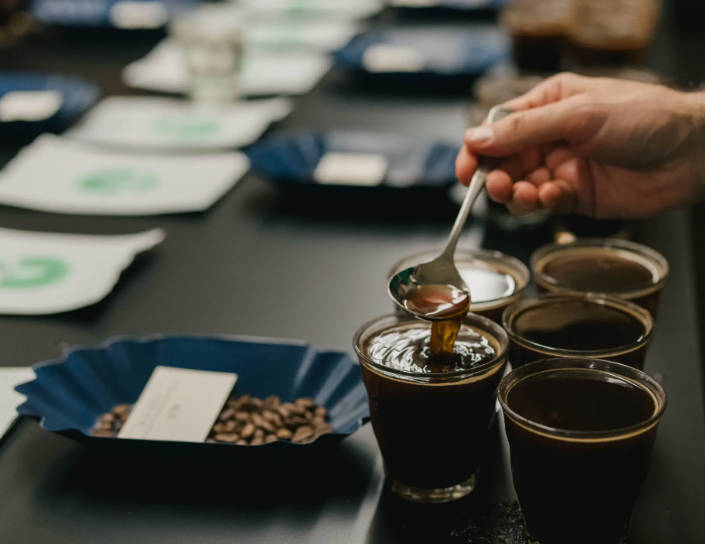
I train acidity discrimination by cupping coffees with known, contrasting acidity types side by side. An Ethiopian washed coffee alongside a Colombian washed coffee reveals how origin shapes acidity character when other variables are controlled. A naturally processed coffee alongside a washed coffee from the same origin reveals how processing affects acidity expression. These controlled comparisons build reference points that inform future evaluation.
Sweetness assessment extends beyond presence to quality and timing. Some coffees present immediate sweetness that fades; others build sweetness through the tasting as the palate adapts. The type of sweetness—honey-like, caramel-like, fruit sugar, brown sugar—influences how it integrates with other flavor elements. Coffees where sweetness balances acidity produce more appealing overall impressions than those where either dominates.
Body evaluation involves both weight (how heavy the coffee feels) and texture (how it feels against palate surfaces). A coffee can be light-bodied but silky, or full-bodied but rough. Texture descriptors like silky, creamy, syrupy, or chalky capture information that weight descriptors alone miss. Processing method strongly influences body character—natural processing typically produces fuller, more textured body than washed processing.
Aftertaste quality significantly affects overall impression but receives insufficient attention from many evaluators. The finish can extend positive experience through lingering sweetness and pleasant aromatics, can introduce negative notes absent from initial taste, or can fade rapidly leaving little impression. Length, quality, and evolution of aftertaste all merit deliberate attention.
The flavor wheel provides vocabulary for articulating aromatic complexity but can overwhelm if approached without structure. I recommend starting with broad categories—fruity, floral, sweet, nutty, spicy, roasted—before attempting specific identifications. A coffee that registers as 'fruity' can then be explored for which fruit category (citrus, berry, stone fruit, tropical) and eventually which specific reference (lemon, blueberry, peach, mango). This hierarchical approach builds vocabulary systematically rather than randomly.
Calibration with reference standards accelerates vocabulary development. Commercial aroma kits provide standardized references for common coffee flavor compounds; tasting actual fruits, chocolates, and other reference foods while drinking coffee helps connect descriptors to perceptions. The goal is building a personal reference library that enables consistent descriptor use.
Origin character recognition develops through systematic exposure. Ethiopian coffees tend toward distinctive fruit-forward profiles—citrus, berries, stone fruits—that differ from the balanced sweetness of Colombian coffees or the chocolatey, nutty profiles of Brazilian coffees. Processing method overlays origin character: natural processing amplifies fruit and body regardless of origin; washed processing emphasizes clarity and acidity.
Learning to separate origin contribution from processing contribution requires tasting the same origin across processing methods and the same processing method across origins. A washed Ethiopian beside a natural Ethiopian reveals processing impact on Ethiopian coffee; a natural Ethiopian beside a natural Brazilian reveals origin difference within natural processing. These systematic comparisons build understanding that random tasting cannot.
Roast influence on flavor expression requires attention. Light roasting preserves origin character and acidity but may leave underdeveloped flavors if taken too far; dark roasting develops roast character (chocolate, caramel, bittersweet) that can complement or overwhelm origin characteristics. Understanding how roast development affects flavor enables evaluation of whether a coffee's profile reflects origin potential or roast imposition.
Integration assessment—how flavor components combine into overall impression—represents the highest level of profile analysis. A coffee with excellent individual components that fail to integrate produces less satisfying experience than one with moderate components that harmonize beautifully. Balance, complexity, and coherence describe integration qualities that distinguish good coffees from exceptional ones.
Practical application of flavor profile mastery varies by professional role. Buyers use profile analysis to identify coffees matching their needs and to communicate with suppliers about quality expectations. Roasters use it to develop profiles that optimize origin expression and to evaluate production consistency. Retailers use it to guide customer selection and to communicate coffee character compellingly. Educators use it to develop curriculum and to assess student progress.
Documentation converts profile analysis into accumulated knowledge. Recording evaluations with consistent formats enables comparison across coffees and identification of personal patterns. Reviewing historical notes before re-evaluating a coffee reveals how perception may have shifted. Building a personal database of evaluated coffees creates reference points that inform future evaluation.
My conclusion from years of developing and teaching flavor profile skills is that mastery is achievable through deliberate practice but requires sustained commitment. The basic ability to taste coffee and say whether you like it requires no development; the sophisticated ability to analyze why it tastes as it does, to predict how it will perform in different applications, and to communicate its character precisely to others requires years of focused attention. This investment pays returns across every aspect of professional coffee work and dramatically enriches personal appreciation. Single origin coffee's distinctive character provides exceptional material for flavor study; the journey of mastery rewards the effort it requires.

Sophia Reynolds
Emma Johnson is a coffee expert with years of experience in brewing techniques, coffee culture, and the global coffee industry. She has extensive knowledge of coffee origins, roasting methods, equipment, and preparation practices, and regularly shares insights, guides, and tips to help enthusiasts and beginners enhance their coffee experience.
You Might Also Like
Comments
-
 Reply
ReplySophia Reynolds
Jun 23, 2025, 11:45 am
I’ve been experimenting with different brewing methods for a few months, and this guide really helped me understand the nuances between pour-over and French press. The tips on water temperature and grind size were especially useful. Thanks for sharing such a detailed article!
-
 Reply
ReplyRonda Otoole
Jun 23, 2025, 11:45 am
As a beginner, I often struggle with choosing the right coffee beans. This post broke down the flavor profiles clearly and gave practical advice on selecting beans based on taste preferences. I feel much more confident in my next purchase now.
 Reply
ReplyJames Whitley
Jun 23, 2025, 11:45 am
Loved the section about sustainable coffee practices! It’s great to see articles that not only focus on brewing but also educate readers on ethical sourcing and environmental impact. Definitely inspired me to try beans from local fair-trade roasters.
-
 Reply
ReplyKimberly Chretien
Jun 23, 2025, 11:45 am
I tried some of the latte art tips from this blog, and even though I’m still a beginner, my coffee looks way better now. The step-by-step instructions and real-world examples made it really easy to follow. Can’t wait to try more techniques!
-
 Reply
ReplySophia Reynolds
Jun 23, 2025, 11:45 am
I really appreciate how this post explains coffee concepts in a simple, approachable way. The breakdown of aroma, acidity, and body helped me understand why different coffees taste the way they do. It’s the kind of article I’ll come back to whenever I try a new bean.