
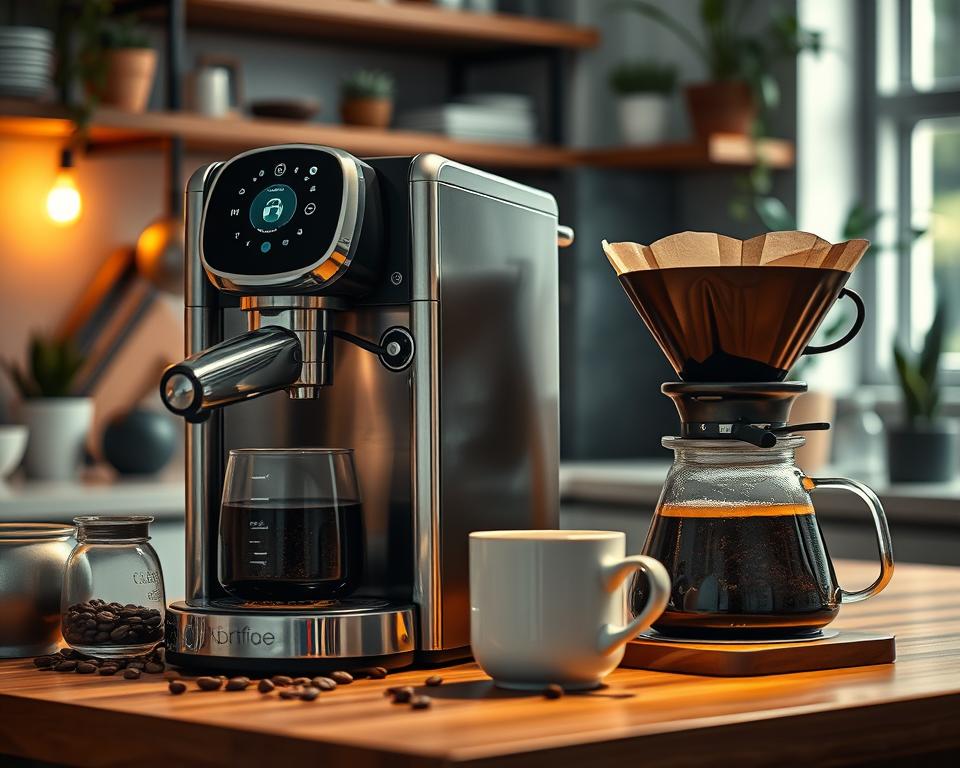
The tension between manual and automated brewing methods reflects broader questions about craft, consistency, and scalability in specialty coffee. Each approach offers distinct advantages; understanding their respective strengths enables informed selection based on specific contexts and goals. Professional practice increasingly recognizes that both methods have legitimate applications.
Manual brewing methods place control directly in the barista's hands—every pour decision, every timing adjustment, every technique variation reflects human judgment in real time. This direct control enables immediate response to coffee behavior and conditions that automated systems cannot match.
I appreciate manual methods for the connection they create between barista and brewing. The hands-on engagement demands attention and enables intuitive adjustment that produces cups reflecting both coffee character and barista skill. This human element adds meaning beyond mere extraction.
Automated brewing methods standardize parameters that manual methods leave variable. Consistent water temperature, precise dosing, and repeatable timing produce reliable results regardless of operator skill or attention. This consistency enables quality at scale that manual methods struggle to achieve.
I recognize automated methods' consistency advantages, particularly for operations where volume demands or staff skill variation would compromise manual quality. Automation serves quality when it eliminates variation that would otherwise degrade results.
Extraction control differs fundamentally between approaches. Manual methods enable mid-brew adjustment based on observation; automated methods commit to programmed parameters regardless of coffee behavior. Each approach has contexts where its control model proves superior.
I match brewing approach to control requirements—using manual methods when coffee characteristics demand responsive adjustment and automated methods when consistent parameter execution matters more than real-time response.
Skill requirements vary dramatically. Manual brewing demands developed technique that takes months or years to master; automated brewing requires understanding of programming and equipment operation. Each approach has learning curves with different shapes and durations.
I invest in appropriate training for each brewing approach, recognizing that excellence in manual methods requires different skill development than excellence in automated operation. Neither approach is inherently easier; each demands different competencies.
Flavor outcomes from manual and automated methods can be indistinguishable when both are executed well. The notion that manual methods inherently produce better coffee reflects romantic attachment rather than sensory reality. Quality depends on execution, not method category.
I evaluate brewing methods by cup quality rather than romantic notions about craft. When automated methods produce equivalent or superior results, I use them without apology; when manual methods offer quality advantages, I invest the additional labor.
Operational context affects method appropriateness. High-volume service may require automation's throughput; intimate settings may benefit from manual brewing's theatrical engagement. Matching method to context optimizes both efficiency and experience.
I select brewing methods based on operational requirements rather than ideological commitment. This pragmatic approach ensures that method selection serves customer experience and business viability.
Customer perception of manual versus automated brewing affects method value beyond cup quality. Some customers value witnessing manual craft; others prioritize speed and consistency. Understanding audience preferences enables appropriate method selection.
I consider customer expectations when selecting brewing methods, recognizing that perceived value matters alongside objective quality. This customer-aware approach aligns method selection with experience goals.
Equipment investment differs substantially. Quality automated brewing equipment requires significant capital investment; manual methods require less expensive equipment but more labor investment. Financial analysis should consider total cost including labor.
I evaluate brewing method costs comprehensively, considering equipment, labor, training, and maintenance when comparing manual and automated approaches. This complete cost analysis enables financially informed decisions.
Coffee suitability may favor one approach over another. Some coffees respond well to automated consistency; others benefit from manual adjustment capability. Matching coffee to method optimizes extraction results.
I consider coffee characteristics when selecting brewing methods, using automated methods for coffees that perform well within standard parameters and manual methods for coffees requiring responsive technique.
Hybrid approaches combine manual and automated elements—using automated water dispensing with manual pour control, or automated timing with manual technique. These combinations capture benefits from both approaches.
I develop hybrid approaches that leverage automation's consistency advantages while preserving manual control where it matters most. This selective integration optimizes overall brewing system performance.
Evolution of automated technology continues to close gaps with manual methods. Advanced automation now offers profiling capability, real-time adjustment, and precision that earlier generations lacked. The manual-automated distinction blurs as technology advances.
I stay current with automation technology development, recognizing that capabilities evolve and that yesterday's limitations may not apply to current equipment. This technology awareness enables informed evaluation.
My professional conclusion is that the manual-automated debate reflects false dichotomy more than genuine opposition. Both approaches have legitimate applications; professional practice selects methods based on context rather than ideology. Excellence is possible through either approach when method matches requirements and execution meets standards.

Sophia Reynolds
Emma Johnson is a coffee expert with years of experience in brewing techniques, coffee culture, and the global coffee industry. She has extensive knowledge of coffee origins, roasting methods, equipment, and preparation practices, and regularly shares insights, guides, and tips to help enthusiasts and beginners enhance their coffee experience.
You Might Also Like
Comments
-
 Reply
ReplySophia Reynolds
Jun 23, 2025, 11:45 am
I’ve been experimenting with different brewing methods for a few months, and this guide really helped me understand the nuances between pour-over and French press. The tips on water temperature and grind size were especially useful. Thanks for sharing such a detailed article!
-
 Reply
ReplyRonda Otoole
Jun 23, 2025, 11:45 am
As a beginner, I often struggle with choosing the right coffee beans. This post broke down the flavor profiles clearly and gave practical advice on selecting beans based on taste preferences. I feel much more confident in my next purchase now.
 Reply
ReplyJames Whitley
Jun 23, 2025, 11:45 am
Loved the section about sustainable coffee practices! It’s great to see articles that not only focus on brewing but also educate readers on ethical sourcing and environmental impact. Definitely inspired me to try beans from local fair-trade roasters.
-
 Reply
ReplyKimberly Chretien
Jun 23, 2025, 11:45 am
I tried some of the latte art tips from this blog, and even though I’m still a beginner, my coffee looks way better now. The step-by-step instructions and real-world examples made it really easy to follow. Can’t wait to try more techniques!
-
 Reply
ReplySophia Reynolds
Jun 23, 2025, 11:45 am
I really appreciate how this post explains coffee concepts in a simple, approachable way. The breakdown of aroma, acidity, and body helped me understand why different coffees taste the way they do. It’s the kind of article I’ll come back to whenever I try a new bean.