

Japan occupies a singular position in global coffee culture—a non-producing country that has profoundly influenced how the world brews, tastes, and appreciates coffee. Having spent three months researching this piece across Tokyo, Kyoto, Osaka, and several smaller cities, I want to share observations about how Japanese coffee culture evolved and what it offers to the broader specialty coffee conversation.
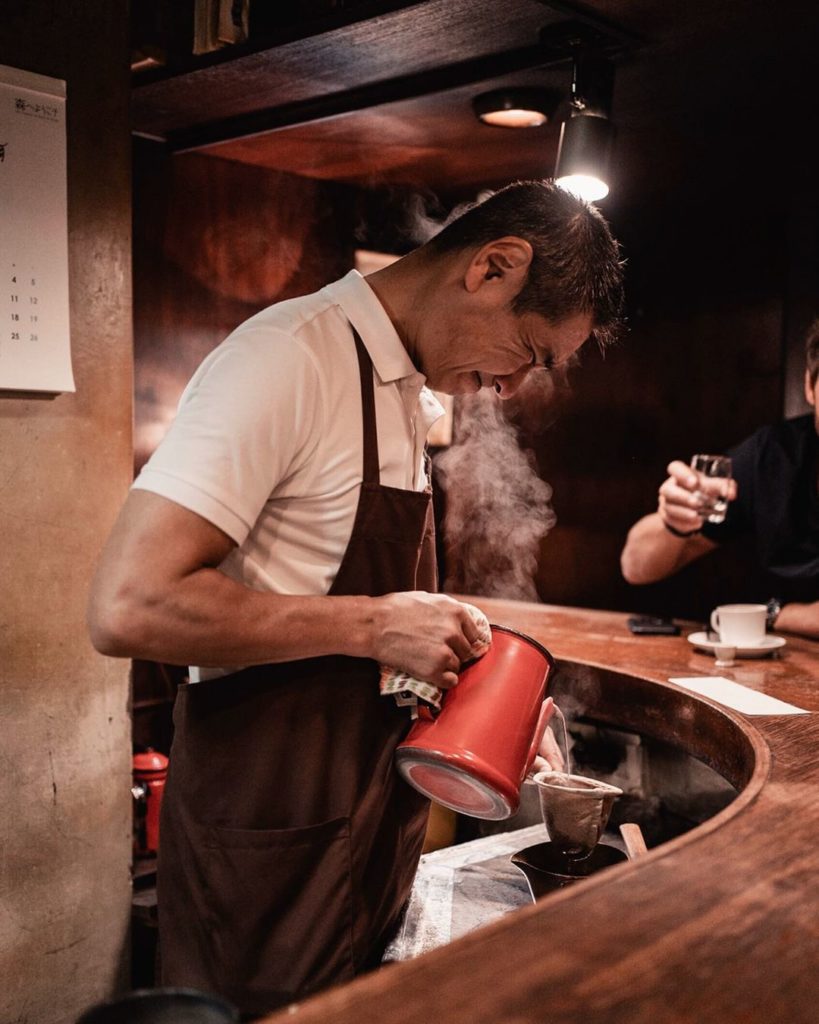
The kissaten tradition provides essential context. These traditional coffee houses, flourishing from the 1950s through the 1980s, established Japan's reputation for brewing precision long before 'specialty coffee' existed as a category. Kissaten masters often spent decades perfecting single techniques—the nel drip method, particular roast profiles, specific water temperatures adjusted seasonally. This craft orientation valued consistency and refinement over novelty, producing remarkable quality within deliberately narrow parameters.
I visited several legendary kissaten during my research, including a Kyoto establishment where the 83-year-old proprietor has served coffee the same way for 55 years. His nel drip technique produces a cup of almost impossible clarity, with flavor notes that emerge in sequence over several minutes of sipping as the coffee cools. The experience is meditative, unhurried, and utterly distinct from contemporary specialty coffee's emphasis on extraction optimization and origin transparency.
The kissaten approach reflects broader Japanese aesthetic principles. The concept of 'kodawari'—an uncompromising dedication to a specific pursuit—manifests in coffee masters who view their work as lifelong practice rather than technical problem-solving. 'Ma,' the principle of negative space, influences service rhythms that prioritize quiet contemplation over efficient throughput. 'Omotenashi,' anticipatory hospitality, shapes interactions where the server intuits guest needs without explicit communication.
Contemporary Japanese specialty coffee represents synthesis rather than rejection of this heritage. When third-wave influences arrived—primarily through Australian and Scandinavian channels—successful operators adapted them to Japanese sensibilities rather than copying wholesale. The physical environments reflect this: where American specialty cafés often cultivate industrial-casual aesthetics, Japanese counterparts tend toward more considered design, with material selection, lighting, and spatial composition receiving attention that would be unusual elsewhere.
The equipment innovations deserve particular attention. Japanese manufacturers have shaped global coffee practice through designs that reflect cultural strengths in precision engineering and aesthetic refinement. The Hario V60, perhaps the most influential pour-over device of the past decade, exemplifies this synthesis: technically superior spiral ridges enable optimal extraction dynamics while the elegant form satisfies visual expectations. The Kalita Wave, various Chemex-compatible filters, gooseneck kettles, and countless brewing accessories emerged from Japanese manufacturers responding to specialty coffee's technical demands.
This engineering influence extends to espresso. Japanese machine manufacturers like Sanremo Japan and Slayer Japan have developed equipment incorporating features specifically requested by Japanese baristas—often focused on consistency, programmability, and maintenance simplicity. Several major competition machines incorporate innovations first developed for Japanese market requirements.
The retail landscape presents fascinating contrasts. Tokyo alone contains thousands of coffee establishments, from kissaten survivors to specialty microroasters to major chains. Competition intensity has driven remarkable quality calibration—even convenience store coffee in Japan exceeds what passes for acceptable in most international markets. This quality floor creates pressure throughout the market, forcing specialty operators to justify premiums through genuine differentiation rather than mere specialty branding.
I spent considerable time exploring neighborhood roasters that defy easy categorization. These establishments, often operated by individuals with decades of industry experience, combine elements from different traditions: kissaten attention to consistent execution, third-wave interest in origin characteristics, and uniquely Japanese aesthetic sensibilities. Their approach offers a model for integrating diverse influences into coherent coffee identities.
The consumer relationship with coffee in Japan differs from Western patterns in ways that merit reflection. Coffee consumption occasions tend toward the ritualistic rather than purely functional—the morning commute coffee-to-go that dominates American consumption is less prevalent. This orientation toward intentional consumption rather than caffeine convenience creates market conditions where quality commands genuine premiums.
However, demographic challenges affect Japanese coffee culture as they affect Japanese society broadly. Many kissaten masters are aging without successors willing to undertake the decades of apprenticeship traditionally required. The knowledge they hold—not just technique but entire approaches to hospitality, quality, and craft—risks disappearing. Several preservation efforts have emerged, including documentation projects and modified apprenticeship programs, but the kissaten tradition's future remains uncertain.
The competition scene showcases Japanese excellence. Japanese baristas have achieved remarkable success in international competitions, often advancing through disciplined preparation, precision execution, and innovative signature beverages that reflect cultural influences. The training infrastructure supporting competition includes intensive coaching programs and practice facilities that exceed what most other countries offer.
My assessment after extensive immersion is that Japanese coffee culture offers something invaluable to the global conversation: demonstration that precision and soul can coexist. The technical excellence is undeniable—brewing methodology, equipment quality, execution consistency. But the deeper contribution is showing how this technical capacity can serve experiential goals that transcend mere extraction optimization.
For specialty coffee professionals, Japan rewards patient study. The immediate impressions—beautiful spaces, excellent coffee, refined service—barely scratch the surface. The deeper lessons emerge from understanding how these elements integrate into coherent philosophies of hospitality, craft, and meaning. These lessons cannot be copied directly but can inform approaches suitable to different cultural contexts.
Japanese coffee culture evolved by absorbing external influences while maintaining distinctive identity. This adaptive capacity, neither rigidly traditional nor unreflectively trendy, offers a model for how local coffee cultures worldwide might develop: learning from global specialty coffee while remaining rooted in local traditions and values.

Marcus Chen
Emma Johnson is a coffee expert with years of experience in brewing techniques, coffee culture, and the global coffee industry. She has extensive knowledge of coffee origins, roasting methods, equipment, and preparation practices, and regularly shares insights, guides, and tips to help enthusiasts and beginners enhance their coffee experience.
You Might Also Like
Comments
-
 Reply
ReplyMarcus Chen
Jun 23, 2025, 11:45 am
I’ve been experimenting with different brewing methods for a few months, and this guide really helped me understand the nuances between pour-over and French press. The tips on water temperature and grind size were especially useful. Thanks for sharing such a detailed article!
-
 Reply
ReplyRonda Otoole
Jun 23, 2025, 11:45 am
As a beginner, I often struggle with choosing the right coffee beans. This post broke down the flavor profiles clearly and gave practical advice on selecting beans based on taste preferences. I feel much more confident in my next purchase now.
 Reply
ReplyJames Whitley
Jun 23, 2025, 11:45 am
Loved the section about sustainable coffee practices! It’s great to see articles that not only focus on brewing but also educate readers on ethical sourcing and environmental impact. Definitely inspired me to try beans from local fair-trade roasters.
-
 Reply
ReplyKimberly Chretien
Jun 23, 2025, 11:45 am
I tried some of the latte art tips from this blog, and even though I’m still a beginner, my coffee looks way better now. The step-by-step instructions and real-world examples made it really easy to follow. Can’t wait to try more techniques!
-
 Reply
ReplyMarcus Chen
Jun 23, 2025, 11:45 am
I really appreciate how this post explains coffee concepts in a simple, approachable way. The breakdown of aroma, acidity, and body helped me understand why different coffees taste the way they do. It’s the kind of article I’ll come back to whenever I try a new bean.