
The single origin coffees that reach consumers represent the survivors of evaluation processes that most coffee drinkers never see. Having managed these processes for specialty roasters and participated in purchasing decisions across thousands of sample evaluations, I want to demystify how professional selection actually works. Understanding the layers of evaluation that precede retail release helps consumers appreciate what single origin designation represents and interpret quality information more effectively.
The evaluation process begins long before roasting samples arrive. Professional buyers establish sourcing criteria based on quality targets, price ranges, origin diversification goals, and seasonal availability. A roaster planning their upcoming offerings might define parameters like: 'seeking washed Central American coffees, 84+ cupping score, landed cost under $5/lb, available in 20-50 bag quantities.' These criteria filter the universe of available coffees before any sensory evaluation occurs.
Sample procurement involves relationship management with exporters, importers, and occasionally direct producer contacts. Established buyers receive pre-shipment samples from their trading partners based on known preferences; newer buyers must actively request samples and demonstrate purchasing capacity. The samples that arrive for evaluation already reflect filtering by trading partners who have assessed whether the coffees match buyer profiles. Much potential coffee never reaches evaluation simply due to relationship and communication limitations.
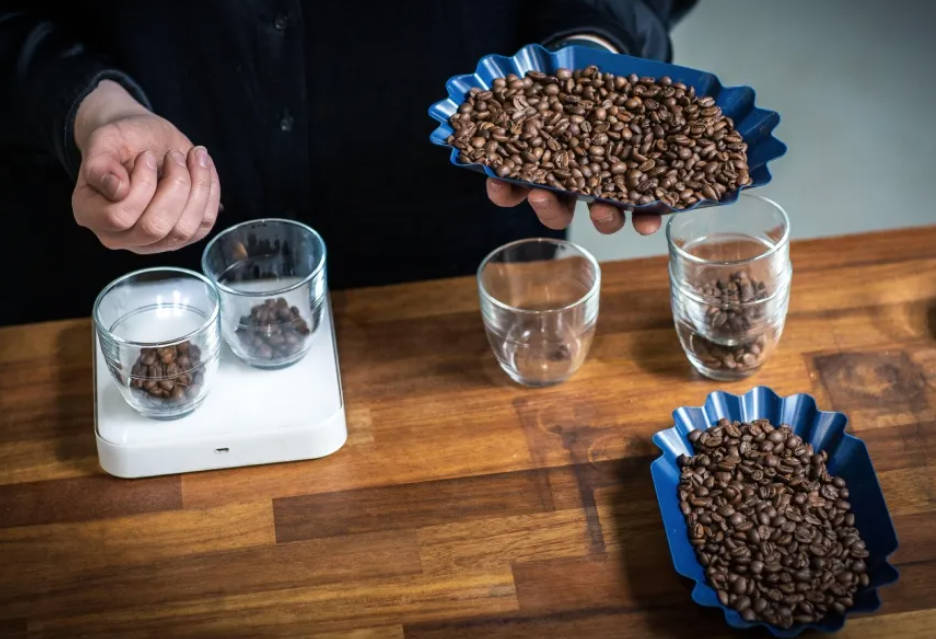
Green evaluation precedes roasting and cupping. Professional buyers assess moisture content, density, defect rates, and visual quality before investing in sample roasting. These metrics indicate storage potential, roasting behavior, and quality floor. A coffee with moisture above 12% or defect rates exceeding acceptable thresholds may be rejected before sensory evaluation occurs. This screening prevents wasting evaluation time on coffees that will fail regardless of how they taste.
Sample roasting applies standardized protocols designed to reveal coffee character rather than demonstrate roasting skill. Unlike production roasting, which may optimize specific sensory targets, sample roasting aims for neutral development that allows the green coffee's qualities to express clearly. Most professional evaluation uses roast protocols established by organizations like the Specialty Coffee Association, enabling comparison across samples and alignment with industry scoring standards.
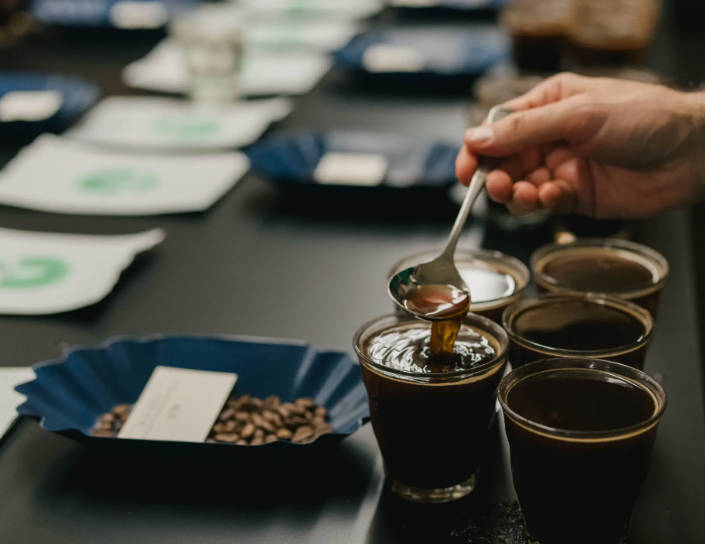
Cupping protocols structure sensory evaluation to maximize consistency and minimize bias. Professional cupping uses specific parameters—grind setting, water temperature, coffee-to-water ratio, steep time—that ensure all samples are evaluated under comparable conditions. The cupping form guides attention through sequential evaluation of fragrance, aroma, flavor, aftertaste, acidity, body, balance, and overall quality. Scoring within established frameworks enables comparison across evaluations and communication with trading partners.
Multiple cuppers evaluating independently help control individual bias. Calibration exercises align cupping teams on scoring standards and descriptor usage. A coffee that one cupper loves and another cupper rejects warrants discussion and re-evaluation; consistent reactions across cuppers provide more reliable quality signals than individual responses. The averaging effects of panel evaluation reduce the influence of personal preference on purchasing decisions.
The evaluation I find most revealing involves comparative cupping—tasting the sample alongside coffees of known quality. How does this new Guatemala compare to the Guatemala we currently offer? Does it justify the price premium the seller is requesting? Does it fill a gap in our current lineup or duplicate something we already have? These contextual questions matter as much as absolute quality assessment for purchasing decisions.
Beyond sensory quality, roasters evaluate commercial considerations. Is the quantity available appropriate for our needs? Is the landed cost compatible with our pricing structure? Does the producer's story support our marketing approach? Can we commit to purchasing this coffee across multiple seasons to build relationship continuity? These factors filter coffees that pass sensory evaluation but fail commercial assessment.
Roast development testing follows purchasing commitment. The sample roast profile that revealed the coffee's character may not produce optimal results at production scale or for specific brewing applications. Production roasters develop profiles through iterative testing—roasting, cupping, adjusting, repeating—until the coffee expresses well in the format customers will experience. A coffee might require different development for filter versus espresso applications, necessitating multiple production profiles.
Quality verification continues through production. Ongoing cupping monitors whether production lots match sample quality and whether roast profiles remain appropriate as green coffee ages. Deviations trigger investigation and adjustment. A coffee that performed beautifully in sample evaluation might disappoint as the production lot ages, requiring profile modification or early discontinuation.
The release decision integrates all preceding evaluation. A coffee reaches retail only when it has passed green screening, cupping evaluation, commercial assessment, roast development, and production verification. The single origin label represents this filtration—the coffee survived a process designed to identify and reject inadequate quality at multiple stages.
For consumers, understanding this process has several implications. The coffees available for purchase have already been extensively vetted; outright quality failures are rare from reputable roasters. Quality communication—cupping scores, tasting notes, origin information—reflects professional evaluation that consumers can reasonably trust even without tasting before purchase. Roaster reputation serves as a useful quality proxy because it reflects evaluation capacity and standards.
The limitations of evaluation processes also deserve acknowledgment. Professional cupping conditions differ from home brewing; coffees that score well in cupping may not perform equally well in your preparation. Evaluation reflects the preferences and calibration of specific tasting teams; another team might reach different conclusions. The process filters for certain quality markers while potentially missing characteristics that particular consumers might value.
My recommendation for consumers is to find roasters whose evaluation standards align with your preferences and trust their curation while remaining open to occasional disappointments that evaluation processes cannot entirely prevent. For aspiring professionals, developing evaluation skills through structured cupping practice, calibration with experienced cuppers, and exposure to diverse coffees builds the foundation for quality assessment that serves both purchasing decisions and customer communication.

Daniel Carter
Emma Johnson is a coffee expert with years of experience in brewing techniques, coffee culture, and the global coffee industry. She has extensive knowledge of coffee origins, roasting methods, equipment, and preparation practices, and regularly shares insights, guides, and tips to help enthusiasts and beginners enhance their coffee experience.
You Might Also Like
Comments
-
 Reply
ReplyDaniel Carter
Jun 23, 2025, 11:45 am
I’ve been experimenting with different brewing methods for a few months, and this guide really helped me understand the nuances between pour-over and French press. The tips on water temperature and grind size were especially useful. Thanks for sharing such a detailed article!
-
 Reply
ReplyRonda Otoole
Jun 23, 2025, 11:45 am
As a beginner, I often struggle with choosing the right coffee beans. This post broke down the flavor profiles clearly and gave practical advice on selecting beans based on taste preferences. I feel much more confident in my next purchase now.
 Reply
ReplyJames Whitley
Jun 23, 2025, 11:45 am
Loved the section about sustainable coffee practices! It’s great to see articles that not only focus on brewing but also educate readers on ethical sourcing and environmental impact. Definitely inspired me to try beans from local fair-trade roasters.
-
 Reply
ReplyKimberly Chretien
Jun 23, 2025, 11:45 am
I tried some of the latte art tips from this blog, and even though I’m still a beginner, my coffee looks way better now. The step-by-step instructions and real-world examples made it really easy to follow. Can’t wait to try more techniques!
-
 Reply
ReplyDaniel Carter
Jun 23, 2025, 11:45 am
I really appreciate how this post explains coffee concepts in a simple, approachable way. The breakdown of aroma, acidity, and body helped me understand why different coffees taste the way they do. It’s the kind of article I’ll come back to whenever I try a new bean.