

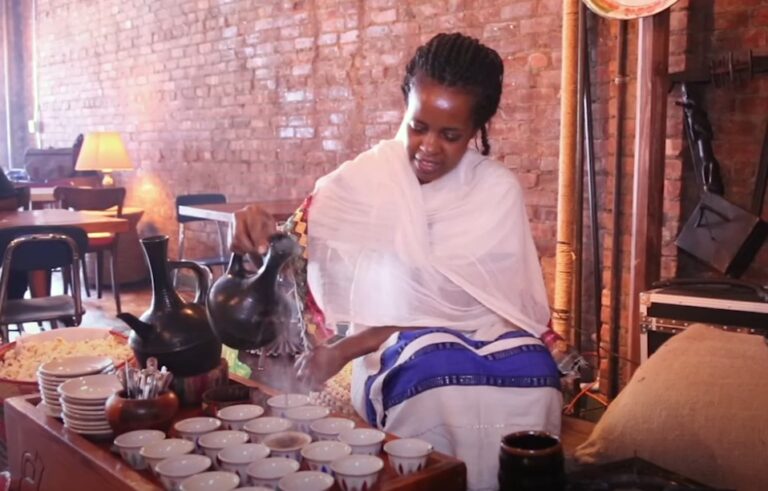
The Ethiopian coffee ceremony cannot be understood through the lens of beverage consumption. It is a social technology—a structured ritual that creates space for conversation, reconciliation, and community bonding in a society where these functions carry profound importance. Having participated in ceremonies across different regions and contexts, I have witnessed how this practice adapts while maintaining its essential character.
The ceremony follows a defined sequence. Green coffee beans are roasted in a flat pan over charcoal or flame, the aromatic smoke deliberately wafted toward guests as the first sensory invitation. The roasted beans are ground by hand using a mortar, then brewed in a jebena (clay pot) with water. The coffee is poured from height into small handleless cups, served with sugar or salt depending on regional preference, often accompanied by popcorn or other snacks.
This process takes approximately one hour—sometimes longer. Three rounds are traditionally served, each with its own name and diminishing strength: abol, tona, and bereka. Leaving before the third round is considered impolite. The temporal commitment is intentional: the ceremony creates obligatory togetherness in societies where daily pressures might otherwise fragment community bonds.
Women traditionally host ceremonies, giving them a domain of social authority and expertise. The skill of roasting evenly, brewing properly, and orchestrating the social dynamics is learned through observation and practice from childhood. In rural Ethiopia, the ceremony remains central to hospitality—refusing to participate signals serious offense.
The social functions served by the ceremony extend beyond mere hospitality. Disputes between neighbors or family members are often addressed during coffee ceremonies, where the ritual structure creates conditions for difficult conversations. The extended timeframe allows tensions to surface and resolve. The shared consumption creates symbolic unity. The woman hosting mediates implicitly through her management of pace and participation.
Spiritual dimensions persist in the ceremony's practice. The burning of incense, the deliberate aromatic presentation of roasting smoke, and the benediction of the third round connect coffee consumption to religious and spiritual frameworks. In Christian Ethiopia, coffee ceremonies often occur on religious holidays and after church services. The ceremony bridges sacred and secular, integrating coffee into the rhythm of spiritual life.
Urbanization and modern work patterns have compressed this tradition. In Addis Ababa, shortened ceremonies accommodate professional schedules, while commercial buna bets (coffee houses) offer public versions accessible to those without domestic hosting capacity. These adaptations preserve the ritual's core while acknowledging changed circumstances.
I observed interesting generational dynamics during my research. Older Ethiopians maintain the full ceremony as cultural obligation and personal preference. Younger urban Ethiopians often participate in abbreviated versions, sometimes viewing full ceremonies as burdensome tradition. The youngest generation shows renewed interest in ceremony practice as cultural heritage, perhaps recognizing value that their parents' generation was too busy to maintain.
The ceremony's influence extends beyond Ethiopia. Ethiopian diaspora communities worldwide maintain ceremony practice, creating spaces where Ethiopian identity can be expressed and transmitted to children born abroad. Coffee ceremonies in Washington DC, London, or Melbourne serve as cultural anchors connecting emigrants to homeland traditions.
For specialty coffee professionals, the Ethiopian ceremony offers essential perspective. It demonstrates that coffee's deepest value lies not in sensory complexity or technical precision, but in its capacity to gather people, structure time, and create meaning. Any coffee culture that forgets this foundation has lost something essential.
The specialty focus on cup quality, while valuable on its own terms, can become disconnected from coffee's social purposes. The Ethiopian ceremony reminds us that how coffee is consumed matters as much as what is consumed—that ritual, community, and intention shape coffee's meaning beyond chemical composition or roast development.
My conclusion after extensive engagement with Ethiopian coffee culture is that the ceremony represents one of humanity's most sophisticated uses of a plant-based beverage. The complexity lies not in flavor notes but in social engineering—the creation of a technology for community maintenance that has functioned for centuries and continues adapting to modern conditions. Those who dismiss the ceremony as mere tradition misunderstand its dynamic, purposeful character.

Isabella Romano
Emma Johnson is a coffee expert with years of experience in brewing techniques, coffee culture, and the global coffee industry. She has extensive knowledge of coffee origins, roasting methods, equipment, and preparation practices, and regularly shares insights, guides, and tips to help enthusiasts and beginners enhance their coffee experience.
You Might Also Like


Comments
-
 Reply
ReplyIsabella Romano
Jun 23, 2025, 11:45 am
I’ve been experimenting with different brewing methods for a few months, and this guide really helped me understand the nuances between pour-over and French press. The tips on water temperature and grind size were especially useful. Thanks for sharing such a detailed article!
-
 Reply
ReplyRonda Otoole
Jun 23, 2025, 11:45 am
As a beginner, I often struggle with choosing the right coffee beans. This post broke down the flavor profiles clearly and gave practical advice on selecting beans based on taste preferences. I feel much more confident in my next purchase now.
 Reply
ReplyJames Whitley
Jun 23, 2025, 11:45 am
Loved the section about sustainable coffee practices! It’s great to see articles that not only focus on brewing but also educate readers on ethical sourcing and environmental impact. Definitely inspired me to try beans from local fair-trade roasters.
-
 Reply
ReplyKimberly Chretien
Jun 23, 2025, 11:45 am
I tried some of the latte art tips from this blog, and even though I’m still a beginner, my coffee looks way better now. The step-by-step instructions and real-world examples made it really easy to follow. Can’t wait to try more techniques!
-
 Reply
ReplyIsabella Romano
Jun 23, 2025, 11:45 am
I really appreciate how this post explains coffee concepts in a simple, approachable way. The breakdown of aroma, acidity, and body helped me understand why different coffees taste the way they do. It’s the kind of article I’ll come back to whenever I try a new bean.