

The journey from coffee cherry to roastable green bean involves processing decisions that fundamentally shape final cup character. While origin, variety, and roast development attract significant attention from specialty coffee consumers, processing may exert equal or greater influence on what you actually taste. Understanding processing methods enables both appreciation of processing-driven flavors and informed purchasing decisions.
The coffee fruit structure frames processing possibilities. The cherry's outer skin encases a mucilage layer of sugary, pectin-rich material surrounding the parchment-covered seeds we roast as coffee. Processing involves removing these outer layers while preserving and developing the seeds' flavor potential. Different methods approach this task through varying combinations of water, fermentation, and drying—each producing distinct flavor outcomes.
Washed processing—the most widespread method globally—removes mucilage before drying begins. After harvesting, cherries are depulped to remove the outer skin, then soaked in fermentation tanks where microbial activity breaks down the mucilage. The resulting parchment coffee is thoroughly washed to remove fermentation residue before drying on patios or raised beds.
Washed coffees typically exhibit bright, clean profiles with prominent acidity and clear origin expression. The water-based mucilage removal creates consistent fermentation outcomes, reducing batch variation and enabling the terroir and variety characteristics to present clearly. Many of coffee's most celebrated origins—Kenya, Colombia, much of Central America—traditionally employ washed processing.
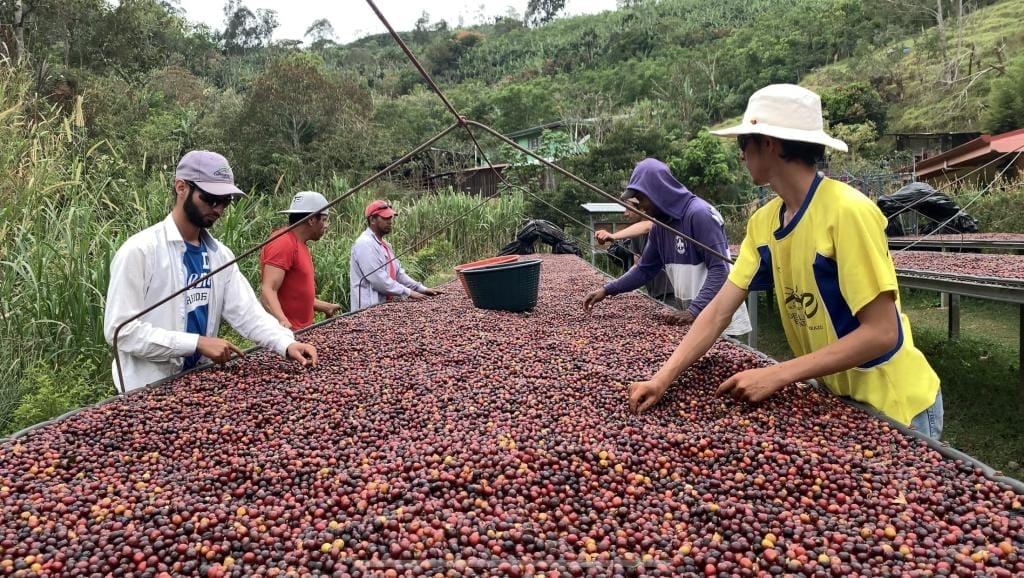
Natural (dry) processing represents the oldest method, predating machinery or infrastructure requirements. Whole cherries dry intact on patios or raised beds, with the fruit slowly desiccating around the seeds over several weeks. This extended contact between fruit and seed enables compound transfer that produces distinctively fruity, full-bodied profiles.
Naturally processed coffees offer flavor intensities—berry notes, winey fermentation, tropical fruit—impossible in washed processing. However, the method carries higher defect risks: uneven drying, mold development, and overfermentation can produce cup defects from slight mustiness to aggressive off-flavors. Quality natural processing requires meticulous attention to cherry selection, turning frequency, and moisture monitoring.
Honey (pulped natural) processing occupies middle ground, removing outer skin while retaining varying amounts of mucilage during drying. The mucilage colors the parchment during drying—yellow, red, or black honey depending on how much material remains—and contributes sweetness and body to final cups. The method combines washed processing's defect reduction with some natural processing's flavor intensity.
Experimental processing has expanded dramatically in recent years, driven by specialty market premiums for distinctive cups. Anaerobic fermentation conducts the fermentation stage in oxygen-free sealed tanks, altering microbial activity and producing intense, sometimes unusual flavor characteristics. Carbonic maceration, borrowed from wine production, places whole cherries in CO2-saturated environments. Extended fermentation prolongs microbial activity for days or weeks beyond traditional timeframes.
These experimental methods can produce extraordinary cups—I have tasted anaerobic coffees with flavors suggesting strawberry jam or cinnamon that seemed impossible from unaugmented coffee. However, they also carry significant risks. Poorly controlled experimental processing produces defects that traditional methods avoid, and the line between 'distinctive' and 'defective' remains subjective and contested within the specialty community.
Yeast and bacterial inoculation represents frontier experimentation. Rather than relying on ambient microorganisms for fermentation, some producers introduce selected strains associated with specific flavor outcomes. Wine and beer industries have used controlled fermentation for centuries; coffee is only beginning to explore these possibilities. The approach promises greater consistency and targeted flavor development but raises authenticity questions about how far processing intervention should extend.
Drying methodology affects all processing methods. Drying rate influences chemical changes within the beans; too fast produces grassy, underdeveloped flavors while too slow risks mold and fermentation defects. Raised African beds—elevated mesh surfaces enabling airflow—have become associated with quality processing, though patio drying remains prevalent and can produce excellent results with proper management. Mechanical drying accelerates the process but risks overheating and uneven moisture if poorly controlled.
Storage conditions after drying represent an often-overlooked processing variable. Green coffee continues evolving chemically during storage, with climate, humidity, and time affecting cup quality. Properly processed coffee poorly stored will decline; excellently stored coffee might maintain quality for eighteen months or longer. The specialty industry increasingly recognizes storage as processing's final stage rather than a logistical afterthought.
Regional processing traditions reflect local conditions and market requirements. Ethiopian coffees include both washed and natural processing, with different regions traditionally emphasizing different methods. Brazilian production overwhelmingly uses natural and pulped natural methods suited to the climate and scale of production. Indonesian wet-hulling (giling basah) produces distinctive flavor profiles associated with the region.
Consumer understanding of processing has grown substantially. Specialty coffee packaging increasingly identifies processing method alongside origin and variety information, enabling preferences to guide purchasing. However, processing terminology remains inconsistent—'honey' means different things to different producers—and the relationship between processing and flavor is complex enough that simple method identification provides incomplete information.
For roasters, processing affects roast development approaches. Naturally processed coffees typically require more careful heat management to avoid scorching the fruit-derived compounds contributing to their distinctive character. Washed coffees often tolerate more aggressive development. Processing also affects coffee density, which influences heat transfer during roasting.
My perspective after years of cupping processing variants is that method choice involves fundamental trade-offs rather than hierarchical quality differences. Washed processing offers clarity and consistency at the cost of potential flavor intensity. Natural processing offers intensity with elevated defect risk. Experimental methods push flavor boundaries while questioning where processing ends and adulteration begins.
The optimal processing method depends on specific coffee, available infrastructure, market requirements, and personal taste preferences. The most useful consumer orientation approaches processing as flavor variable rather than quality indicator—asking 'what character does this processing contribute?' rather than 'is this processing method good or bad?'

Marcus Chen
Emma Johnson is a coffee expert with years of experience in brewing techniques, coffee culture, and the global coffee industry. She has extensive knowledge of coffee origins, roasting methods, equipment, and preparation practices, and regularly shares insights, guides, and tips to help enthusiasts and beginners enhance their coffee experience.
You Might Also Like
Comments
-
 Reply
ReplyMarcus Chen
Jun 23, 2025, 11:45 am
I’ve been experimenting with different brewing methods for a few months, and this guide really helped me understand the nuances between pour-over and French press. The tips on water temperature and grind size were especially useful. Thanks for sharing such a detailed article!
-
 Reply
ReplyRonda Otoole
Jun 23, 2025, 11:45 am
As a beginner, I often struggle with choosing the right coffee beans. This post broke down the flavor profiles clearly and gave practical advice on selecting beans based on taste preferences. I feel much more confident in my next purchase now.
 Reply
ReplyJames Whitley
Jun 23, 2025, 11:45 am
Loved the section about sustainable coffee practices! It’s great to see articles that not only focus on brewing but also educate readers on ethical sourcing and environmental impact. Definitely inspired me to try beans from local fair-trade roasters.
-
 Reply
ReplyKimberly Chretien
Jun 23, 2025, 11:45 am
I tried some of the latte art tips from this blog, and even though I’m still a beginner, my coffee looks way better now. The step-by-step instructions and real-world examples made it really easy to follow. Can’t wait to try more techniques!
-
 Reply
ReplyMarcus Chen
Jun 23, 2025, 11:45 am
I really appreciate how this post explains coffee concepts in a simple, approachable way. The breakdown of aroma, acidity, and body helped me understand why different coffees taste the way they do. It’s the kind of article I’ll come back to whenever I try a new bean.