
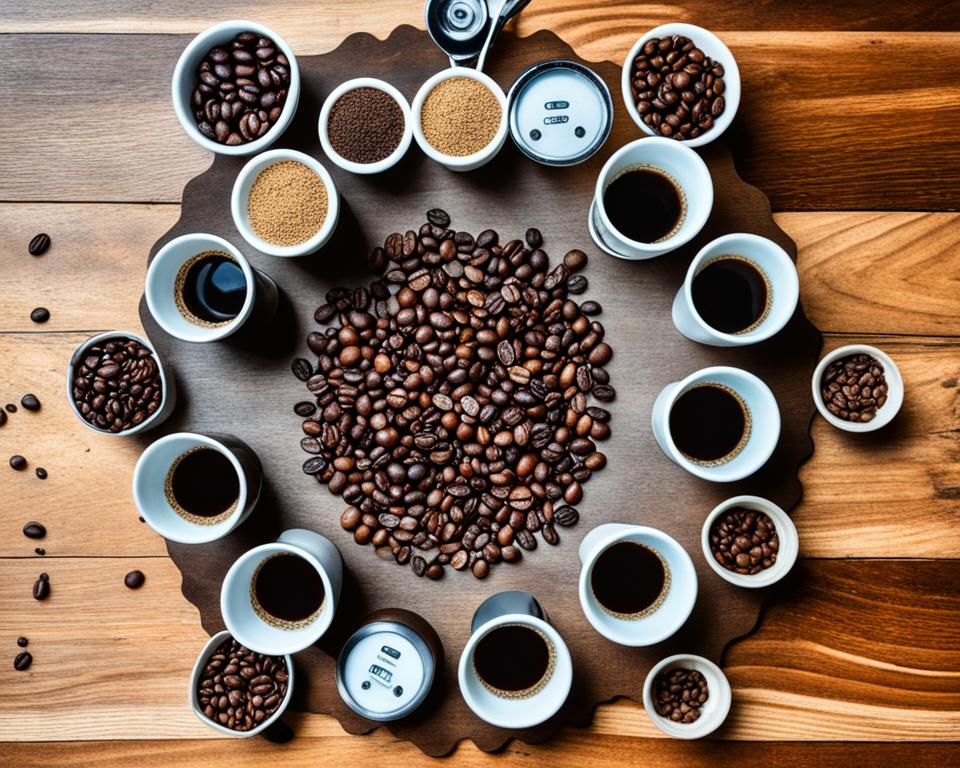
Cupping is the foundation of professional coffee evaluation, yet the gap between basic cupping competence and advanced sensory assessment is vast. Having trained dozens of roasters, buyers, and quality control professionals over my career, I have developed approaches that extend well beyond standard protocols to reveal nuances that basic evaluation misses. This article shares advanced techniques that transform cupping from a routine quality check into a sophisticated analytical tool.
The standard cupping protocol—established by organizations like the Specialty Coffee Association—provides essential structure: specific grind size, water temperature, coffee-to-water ratio, and steep time create controlled conditions for evaluation. These parameters matter because they ensure comparability across samples and evaluators. However, mastering the protocol is merely the entry point; advanced cupping involves developing perceptual skills and analytical frameworks that extract maximum information from each session.
Aroma evaluation deserves far more attention than most cuppers provide. The dry fragrance phase—smelling the ground coffee before water addition—reveals volatile compounds that dissipate rapidly once brewing begins. I train evaluators to spend substantial time with dry fragrance, noting not just pleasant or unpleasant impressions but specific aromatic categories: enzymatic notes (fruit, floral), sugar browning notes (caramel, chocolate, nutty), and dry distillation notes (spicy, carbony, resinous). This categorical approach builds vocabulary and improves descriptor precision.
The wet aroma phase, immediately after water addition and during the break, provides different information. The crust that forms on the cupping bowl traps aromatics that release when broken—this moment offers concentrated aromatic intensity that reveals compounds present in lower concentrations. I teach cuppers to break the crust deliberately, inhaling deeply while agitating, then to return for secondary assessment as the bowl cools. The aromatic evolution from hot to warm temperatures reveals different compound families.
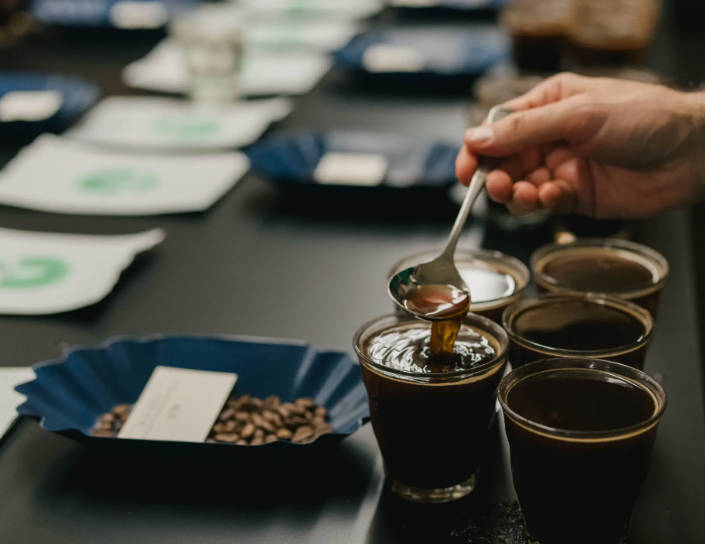
Aspiration technique—the distinctive slurping that defines professional cupping—serves specific sensory purposes that novice cuppers often misunderstand. The goal is not simply to taste the coffee but to aerosolize it across the entire palate while simultaneously introducing it to retronasal olfaction. Proper aspiration spreads coffee across tongue regions with different taste receptor concentrations while vaporizing aromatics that travel to olfactory receptors through the back of the throat. The technique requires practice to execute consistently.
I have observed that many cuppers aspirate too gently, failing to achieve the aerosolization that reveals aromatic complexity, or too aggressively, creating discomfort that interferes with evaluation. The optimal technique produces a fine spray that coats the palate evenly while generating audible but not excessive aspiration sound. Practicing with water before cupping sessions can help develop consistent technique.
Taste evaluation in advanced cupping distinguishes between basic taste qualities and their structural characteristics. Acidity, for instance, is not simply present or absent, strong or weak—it has type, quality, and integration. Citric acidity (lemon-like, sharp) differs from malic acidity (apple-like, rounded) differs from phosphoric acidity (sparkling, bright). Recognizing acidity type, not just intensity, enables more precise origin and processing identification.
Sweetness assessment extends beyond simple presence to evaluate sweetness type and timing. Some coffees present immediate sweetness that fades; others build sweetness through the evaluation as the palate adapts. The relationship between sweetness and acidity—whether they balance, complement, or conflict—significantly affects overall cup quality. Advanced cuppers evaluate this interaction rather than scoring components in isolation.
Body assessment involves both weight (how heavy the coffee feels) and texture (how it feels against palate surfaces). A coffee can be light-bodied but silky, or full-bodied but rough. These textural qualities influence enjoyment and brewing application suitability. I train cuppers to describe body using both weight and texture descriptors, building vocabulary that captures the full tactile experience.
Aftertaste evaluation receives insufficient attention in basic cupping. The finish—what remains after swallowing—can extend the positive experience, introduce negative notes absent from initial taste, or fade rapidly leaving little impression. Length, quality, and evolution of aftertaste all merit evaluation. Some of the most exceptional single origin coffees are distinguished primarily by their finish characteristics rather than their initial impression.
Calibration with other cuppers is essential for professional evaluation. Individual perception varies due to genetic differences in receptor sensitivity, experiential differences in reference libraries, and contextual factors affecting attention and sensitivity. Regular calibration sessions—where panels cup the same coffees and compare scores and descriptors—reveal individual tendencies and build shared evaluation frameworks. Without calibration, individual assessments cannot be compared meaningfully.
I conduct calibration exercises that go beyond simple score comparison. We discuss not just what we perceive but why we score as we do, what references we are using, and where our perceptions diverge. This discussion builds shared vocabulary and reveals blind spots in individual evaluation. A cupper who consistently scores acidity lower than the panel may be less sensitive to certain acid types or may be using different scoring criteria—understanding the source of divergence enables correction.
Environmental factors affect cupping accuracy more than most professionals acknowledge. Room temperature influences coffee cooling rate and therefore the window for optimal evaluation. Lighting affects color perception, which can unconsciously influence flavor expectations. Ambient odors interfere with olfactory assessment. Physical state—fatigue, hunger, illness, medication—affects sensory acuity. Professional cupping requires controlling these variables and recognizing when conditions compromise evaluation validity.
I schedule important cupping evaluations for mid-morning, when alertness peaks but fatigue has not accumulated, after a light breakfast that does not leave strong flavor residues, in well-ventilated rooms with neutral lighting. These conditions may seem fussy but meaningfully improve evaluation reliability. The stakes of professional cupping—purchasing decisions involving significant investment—justify environmental optimization.
Documentation transforms cupping from subjective impression into actionable data. I maintain detailed records of every cupping session: samples evaluated, scores assigned, descriptors used, panel composition, environmental conditions, and any anomalies noted. These records enable longitudinal analysis—tracking how specific origins or producers perform over time, identifying my own scoring tendencies, and building reference points for future evaluations.
The relationship between cupping and application deserves more attention than it typically receives. Cupping protocols are designed for evaluation, not replication of consumer experience. A coffee that scores exceptionally in cupping may disappoint as espresso or cold brew; a coffee that seems unremarkable in cupping may excel in specific applications. Advanced evaluation includes consideration of how cupping performance predicts application performance.
For roasters, cupping provides feedback loops that inform profile development. Cupping the same green coffee across different roast profiles reveals how development choices affect sensory outcomes. I cup multiple profiles of each new coffee before settling on production approach, documenting how charge temperature, development time, and end temperature influence acidity, sweetness, and body expression. This systematic approach replaces intuition with data.
My conclusion after years of developing and teaching advanced cupping techniques is that sensory evaluation is a skill that improves with deliberate practice, structured methodology, and continuous calibration. The basic cupping protocol provides a starting framework, but professional excellence requires developing the perceptual acuity, analytical frameworks, and documentation practices that transform cupping into a sophisticated quality tool. For anyone serious about single origin coffee evaluation, investing in advanced sensory development pays returns across every aspect of quality assessment.

Daniel Carter
Emma Johnson is a coffee expert with years of experience in brewing techniques, coffee culture, and the global coffee industry. She has extensive knowledge of coffee origins, roasting methods, equipment, and preparation practices, and regularly shares insights, guides, and tips to help enthusiasts and beginners enhance their coffee experience.
You Might Also Like
Comments
-
 Reply
ReplyDaniel Carter
Jun 23, 2025, 11:45 am
I’ve been experimenting with different brewing methods for a few months, and this guide really helped me understand the nuances between pour-over and French press. The tips on water temperature and grind size were especially useful. Thanks for sharing such a detailed article!
-
 Reply
ReplyRonda Otoole
Jun 23, 2025, 11:45 am
As a beginner, I often struggle with choosing the right coffee beans. This post broke down the flavor profiles clearly and gave practical advice on selecting beans based on taste preferences. I feel much more confident in my next purchase now.
 Reply
ReplyJames Whitley
Jun 23, 2025, 11:45 am
Loved the section about sustainable coffee practices! It’s great to see articles that not only focus on brewing but also educate readers on ethical sourcing and environmental impact. Definitely inspired me to try beans from local fair-trade roasters.
-
 Reply
ReplyKimberly Chretien
Jun 23, 2025, 11:45 am
I tried some of the latte art tips from this blog, and even though I’m still a beginner, my coffee looks way better now. The step-by-step instructions and real-world examples made it really easy to follow. Can’t wait to try more techniques!
-
 Reply
ReplyDaniel Carter
Jun 23, 2025, 11:45 am
I really appreciate how this post explains coffee concepts in a simple, approachable way. The breakdown of aroma, acidity, and body helped me understand why different coffees taste the way they do. It’s the kind of article I’ll come back to whenever I try a new bean.