


Consumer perception of signature blends operates through filters of expectation, experience, and context that significantly influence how the same coffee is experienced by different drinkers. Understanding these perceptual dynamics enables blend developers to create products that connect with consumers and communicators to present blends in ways that enhance appreciation. Having studied consumer response to signature blends through tastings, focus groups, and market analysis, I share insights that bridge professional assessment and consumer experience.
The gap between professional and consumer perception represents the central challenge in blend communication. Professionals evaluate coffee through trained palates, standardized protocols, and technical vocabulary. Consumers evaluate through personal preference frameworks, variable preparation, and everyday language. A blend that scores 87 points in professional cupping may disappoint a consumer who dislikes bright acidity or delight one who values complexity. Professional quality assessment provides necessary but insufficient guidance for consumer success.
Expectation shapes perception more powerfully than most producers acknowledge. Consumers who expect a blend to taste fruity perceive fruit notes more readily; those expecting chocolate find chocolate more easily. This expectation effect means that how you describe a blend influences how consumers taste it. Descriptors function not just as information but as perceptual primes that direct attention and interpretation.
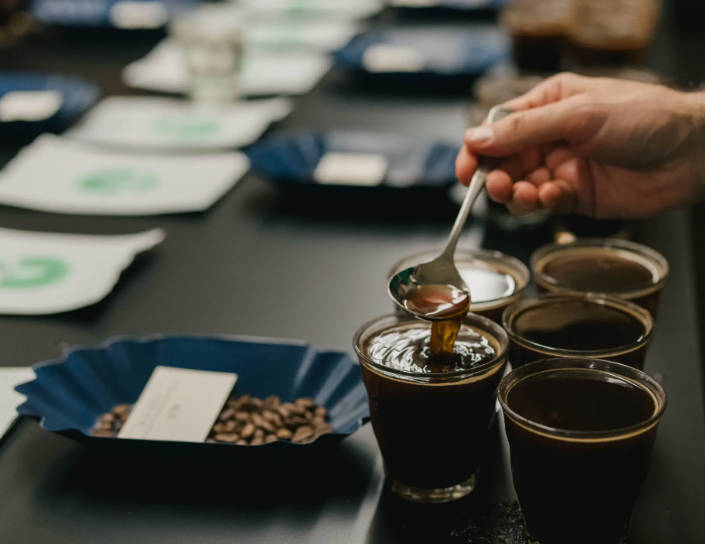
I have tested expectation effects directly, presenting the same blend with different descriptions to different consumer groups. Groups told to expect 'bright citrus notes' reported more citrus perception than groups told to expect 'rich chocolate tones'—even though they were drinking identical coffee. This finding has profound implications for communication strategy: choose descriptors that align with what consumers will actually perceive while directing attention toward your blend's strengths.
Prior experience creates reference frameworks that shape new perceptions. Consumers who have drunk primarily dark-roasted commodity coffee evaluate specialty blends through that reference—often perceiving lighter roasts as 'weak' or 'sour' rather than 'bright' or 'complex.' Consumers with specialty coffee experience bring different references that enable appreciation of characteristics that commodity backgrounds might miss.
This reference effect suggests that consumer education and product positioning must account for audience experience. A blend positioned for specialty-experienced consumers can emphasize nuanced characteristics that this audience will appreciate. One positioned for broader markets may need to prioritize familiar characteristics while gradually introducing complexity. Misalignment between blend character and audience reference produces disappointment regardless of objective quality.
Brewing context dramatically affects consumer experience. The same blend prepared with quality equipment and appropriate technique produces different results than that prepared with commodity equipment and default settings. Most consumers brew at home with variable equipment and inconsistent technique—their experience of your blend reflects their preparation as much as your product. Communication that includes brewing guidance improves the match between intended and actual consumer experience.
I recommend including specific brewing recommendations with signature blends—not generic guidelines but parameters optimized for each specific blend. A blend with delicate aromatics might benefit from slightly lower temperature and longer contact time; one with robust body might handle higher temperature extraction. These recommendations help consumers achieve results closer to the intended profile.
The consumption context—where, when, with what, and with whom coffee is consumed—influences perception independently of the coffee itself. Morning consumption while rushed produces different experience than leisurely afternoon enjoyment. Coffee consumed with food interacts with those flavors; coffee consumed socially carries social associations. These contextual factors are largely outside producer control but worth considering in positioning and communication.
Price perception interacts with quality perception in complex ways. Higher prices create expectations of superior quality; when those expectations are met, higher price enhances perceived quality beyond what blind tasting would reveal. When expectations are not met, higher price creates disappointment that lower-priced alternatives would not trigger. Pricing strategy must align with achievable quality delivery—neither undercutting quality with low prices that signal commodity positioning nor creating undeliverable expectations with premium prices.
I have observed consumer willingness to pay increase when blend stories and quality cues align with elevated price points. Consumers accept that craft products cost more than commodities; premium pricing that is supported by visible quality indicators and compelling narrative can actually enhance rather than diminish perceived value. The key is consistency between price positioning and every other brand signal.
Transparency about composition and sourcing affects consumer perception differently across segments. Enthusiast consumers value detailed origin information, processing descriptions, and relationship stories. Mass-market consumers may find such detail overwhelming or irrelevant. Matching transparency level to audience enables information to enhance rather than complicate perception.
I develop tiered communication approaches—essential information prominently featured for all consumers, detailed information available for those who seek it. This layering serves diverse audiences without forcing complexity on consumers who prefer simplicity or withholding depth from those who value it.
Sensory education transforms consumer perception capacity. Consumers who have participated in guided tastings, learned flavor vocabulary, and developed discrimination perceive more complexity and derive more enjoyment from quality blends. Investment in consumer education pays returns through enhanced appreciation that supports premium positioning and repeat purchase.
I advocate for education approaches that build confidence rather than intimidate. Many consumers feel inadequate when confronted with professional tasting language; education that validates personal perception while expanding vocabulary creates enthusiasts rather than anxious consumers. The goal is helping people perceive more of what is present, not making them feel they taste incorrectly.
Loyalty to signature blends develops through consistent positive experience over time. A blend that delivers reliably becomes part of consumer routine—the known quantity they trust when exploring feels risky. This loyalty represents significant commercial value but requires maintaining the consistency that created it. Blend evolution that loses loyal consumers rarely gains enough new ones to compensate.
My conclusion from studying consumer perception is that signature blend success requires understanding not just what you produce but how it will be experienced by diverse consumers with different backgrounds, expectations, and contexts. This understanding should inform blend development, positioning, communication, and quality control. The blends that succeed commercially are those where professional quality and consumer perception align—where what you intended consumers to experience is actually what they experience. Achieving this alignment requires ongoing attention to the consumer perspective that pure quality focus might neglect.

Daniel Carter
Emma Johnson is a coffee expert with years of experience in brewing techniques, coffee culture, and the global coffee industry. She has extensive knowledge of coffee origins, roasting methods, equipment, and preparation practices, and regularly shares insights, guides, and tips to help enthusiasts and beginners enhance their coffee experience.
You Might Also Like

Comments
-
 Reply
ReplyDaniel Carter
Jun 23, 2025, 11:45 am
I’ve been experimenting with different brewing methods for a few months, and this guide really helped me understand the nuances between pour-over and French press. The tips on water temperature and grind size were especially useful. Thanks for sharing such a detailed article!
-
 Reply
ReplyRonda Otoole
Jun 23, 2025, 11:45 am
As a beginner, I often struggle with choosing the right coffee beans. This post broke down the flavor profiles clearly and gave practical advice on selecting beans based on taste preferences. I feel much more confident in my next purchase now.
 Reply
ReplyJames Whitley
Jun 23, 2025, 11:45 am
Loved the section about sustainable coffee practices! It’s great to see articles that not only focus on brewing but also educate readers on ethical sourcing and environmental impact. Definitely inspired me to try beans from local fair-trade roasters.
-
 Reply
ReplyKimberly Chretien
Jun 23, 2025, 11:45 am
I tried some of the latte art tips from this blog, and even though I’m still a beginner, my coffee looks way better now. The step-by-step instructions and real-world examples made it really easy to follow. Can’t wait to try more techniques!
-
 Reply
ReplyDaniel Carter
Jun 23, 2025, 11:45 am
I really appreciate how this post explains coffee concepts in a simple, approachable way. The breakdown of aroma, acidity, and body helped me understand why different coffees taste the way they do. It’s the kind of article I’ll come back to whenever I try a new bean.