
Throughout two decades of professional coffee work—sourcing green coffee across six producing countries, roasting thousands of single origin lots, training baristas and consumers, and consulting for specialty operations worldwide—I have encountered a remarkably consistent set of assumptions about single origin coffee. These assumptions are widely accepted within and beyond the specialty community, frequently repeated in marketing materials and consumer education, and largely wrong. This article examines the most persistent myths with evidence from direct experience, sensory data, and supply chain realities.
The first and perhaps most damaging myth is that single origin automatically indicates higher quality. This assumption underlies much single origin marketing and shapes consumer purchasing decisions, yet it fundamentally misunderstands what single origin designation actually means. Single origin is a provenance claim, not a quality claim. It tells you where the coffee came from; it tells you nothing about how well it was produced, processed, or roasted.
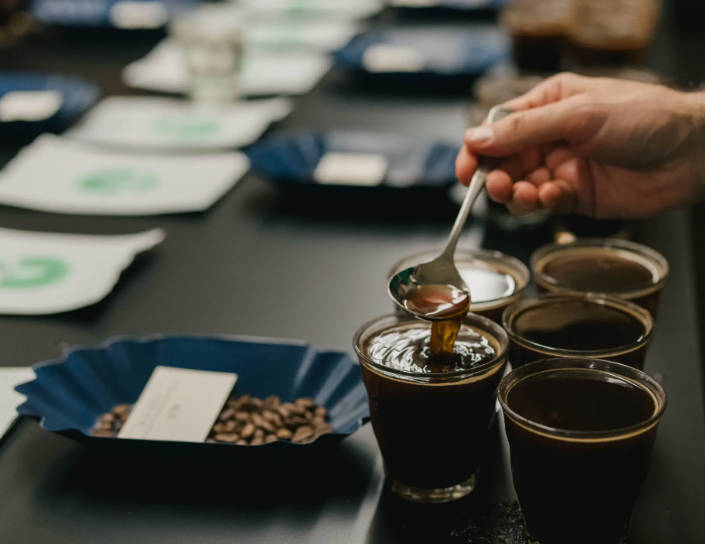
I have cupped single origin lots across the full quality spectrum. Some represent the finest coffees I have encountered—distinctive, complex, meticulously produced. Others were poorly processed, inadequately sorted, or badly roasted, producing cups that no amount of origin specificity could redeem. The single origin label applied equally to both. Quality results from execution at every stage—agricultural practice, harvest selection, processing precision, roasting skill—not from geographic designation.
Consumers who assume single origin equals quality may purchase expensive single origin coffees that disappoint, concluding either that their palate is inadequate or that specialty coffee is overrated. Neither conclusion is accurate; the coffee was simply poor quality despite its single origin designation. Learning to evaluate quality independently of origin claims dramatically improves purchasing decisions and coffee satisfaction.
The second myth is that single origin coffee must taste complex or exotic. Marketing narratives often emphasize unusual flavor notes—jasmine, bergamot, tropical fruit—creating expectations that single origin coffees should deliver novel sensory experiences distinguishing them from 'ordinary' coffee. This expectation misses that many excellent single origin coffees present clean, straightforward profiles rather than exotic complexity.
Some of my highest-scoring cupping evaluations have gone to coffees with relatively simple but exceptionally well-executed profiles: clean sweetness, balanced acidity, pleasant body, and a long finish—without dramatic aromatics or unusual flavor notes. These coffees represent excellent quality without complexity. The reverse also occurs: I have cupped coffees with interesting flavor notes but poor structural balance, producing experiences that were novel but not enjoyable.
Complexity is one dimension of quality, not a prerequisite for it. Single origin coffees that present straightforward profiles with excellent execution deserve appreciation on their own terms, not dismissal for failing to deliver exotic experiences. The myth of required complexity sets false expectations that may lead consumers to overlook genuinely excellent coffees that happen to present more conventional flavor profiles.
The third myth positions blends as inherently inferior to single origins, a logical corollary of the single origin quality assumption but equally unfounded. Having developed both single origin programs and competition-winning blends, I can confirm that blending requires different but equally rigorous skill sets, and excellent blends can match or exceed single origin quality.
Blending at its best involves intentional combination of components to achieve specific flavor goals that no single origin can accomplish alone. A skilled blender might combine an Ethiopian component for aromatic complexity, a Colombian component for structural acidity, and a Brazilian component for body and sweetness, creating a whole greater than its parts. This is creative and technical work requiring deep understanding of how components interact.
The specialty coffee industry's emphasis on single origins has sometimes devalued blending skill, treating blends as either entry-level products for unsophisticated consumers or compromises made when single origin supplies are inadequate. This devaluation misses that many consumers prefer well-constructed blends to single origins, and that blending expertise is a legitimate professional specialty deserving respect.
The fourth myth equates higher price with ethical superiority. Consumers often assume that paying more for single origin coffee means farmers receive proportionally more benefit. This assumption seems logical but ignores how value actually distributes across coffee supply chains.
The retail price of a single origin coffee reflects multiple margin layers: café or retailer margin, roaster margin, importer margin, exporter margin, and finally producer payment. Higher retail prices may reflect larger margins at any of these stages rather than increased producer benefit. A $25 retail bag of single origin coffee may provide the farmer no more than a $15 bag if the price difference reflects roaster positioning rather than producer premium.
Genuine producer benefit requires specific mechanisms: transparent pricing, direct trade relationships, long-term contracts, and reinvestment programs. Without these mechanisms, premium pricing at retail may enrich supply chain intermediaries while leaving producers in essentially the same economic position. Consumers who want their purchases to benefit farmers should look for specific information about producer payment rather than assuming that higher prices automatically flow to origin.
The fifth myth holds that certain origins are reliably superior to others—that Ethiopian coffee is categorically better than Brazilian, that Kenyan AA always surpasses Colombian, that Panamanian Gesha justifies any premium. These origin reputations reflect real quality trends but obscure enormous variation within each category.
I have cupped exceptional Brazilian coffees that outscored mediocre Ethiopians, outstanding Honduran coffees that exceeded average Kenyan offerings, and overpriced Gesha that failed to justify premiums over well-executed traditional varieties. Origin provides useful but incomplete information; it suggests what characteristics might be present but cannot guarantee quality or indicate whether a specific lot represents the best or worst of its origin category.
The most sophisticated consumers and buyers evaluate specific offerings rather than origin categories, using origin as one factor among many rather than a primary quality indicator. This approach requires more evaluation effort but produces better purchasing decisions.
The sixth myth treats single origin designation as guarantee of traceability or direct farmer relationships. In practice, 'single origin' can describe coffees traced to specific farms with documented farmer relationships, or coffees blended from multiple farms within a region without specific producer identification. The term alone provides no assurance of supply chain transparency.
Consumers who value traceability should look for specific information beyond the single origin label: farm or cooperative names, lot numbers, relationship descriptions, and pricing transparency. When this information is absent, the single origin designation may simply indicate country or region of origin—useful geographic information but not the intimate traceability that marketing narratives often suggest.
My conclusion after examining these myths is that single origin coffee deserves respect but not mystification. The category includes exceptional coffees worth seeking out and ordinary coffees that happen to have specific provenance. Developing the ability to distinguish between them—through palate development, information evaluation, and skepticism toward marketing claims—enables more satisfying coffee experiences and more meaningful support for producers who genuinely deliver quality.
Dispelling these myths serves both consumers and producers. Consumers who evaluate quality independently of origin assumptions make better purchasing decisions. Producers whose quality is genuinely exceptional gain appropriate recognition rather than competing with inferior coffees riding origin reputation. The single origin category becomes more meaningful when we stop assuming it means more than it actually does.

Daniel Carter
Emma Johnson is a coffee expert with years of experience in brewing techniques, coffee culture, and the global coffee industry. She has extensive knowledge of coffee origins, roasting methods, equipment, and preparation practices, and regularly shares insights, guides, and tips to help enthusiasts and beginners enhance their coffee experience.
You Might Also Like
Comments
-
 Reply
ReplyDaniel Carter
Jun 23, 2025, 11:45 am
I’ve been experimenting with different brewing methods for a few months, and this guide really helped me understand the nuances between pour-over and French press. The tips on water temperature and grind size were especially useful. Thanks for sharing such a detailed article!
-
 Reply
ReplyRonda Otoole
Jun 23, 2025, 11:45 am
As a beginner, I often struggle with choosing the right coffee beans. This post broke down the flavor profiles clearly and gave practical advice on selecting beans based on taste preferences. I feel much more confident in my next purchase now.
 Reply
ReplyJames Whitley
Jun 23, 2025, 11:45 am
Loved the section about sustainable coffee practices! It’s great to see articles that not only focus on brewing but also educate readers on ethical sourcing and environmental impact. Definitely inspired me to try beans from local fair-trade roasters.
-
 Reply
ReplyKimberly Chretien
Jun 23, 2025, 11:45 am
I tried some of the latte art tips from this blog, and even though I’m still a beginner, my coffee looks way better now. The step-by-step instructions and real-world examples made it really easy to follow. Can’t wait to try more techniques!
-
 Reply
ReplyDaniel Carter
Jun 23, 2025, 11:45 am
I really appreciate how this post explains coffee concepts in a simple, approachable way. The breakdown of aroma, acidity, and body helped me understand why different coffees taste the way they do. It’s the kind of article I’ll come back to whenever I try a new bean.