
I have written thousands of tasting notes over my career—for purchasing decisions, roast profile evaluation, retail packaging, and competition scoring. I have also participated in calibration exercises where panels of experienced tasters attempted to achieve consensus on the same coffees. These experiences have given me a complicated relationship with tasting notes as they appear on single origin coffee packaging. They serve real functions but are often misunderstood in ways that create disappointment and distrust. Understanding what tasting notes actually are—and what they are not—enables more productive engagement with single origin coffee.
Tasting notes as they appear on retail coffee packaging represent an attempt to translate sensory experience into language. When a roaster writes that a coffee displays 'notes of blueberry, dark chocolate, and honey,' they are describing chemical compounds in the coffee that their trained palates associate with those reference points. These associations are genuine—aromatic compounds in coffee do overlap with compounds found in fruits, flowers, and other foods. The translation from chemistry to language is where complications arise.
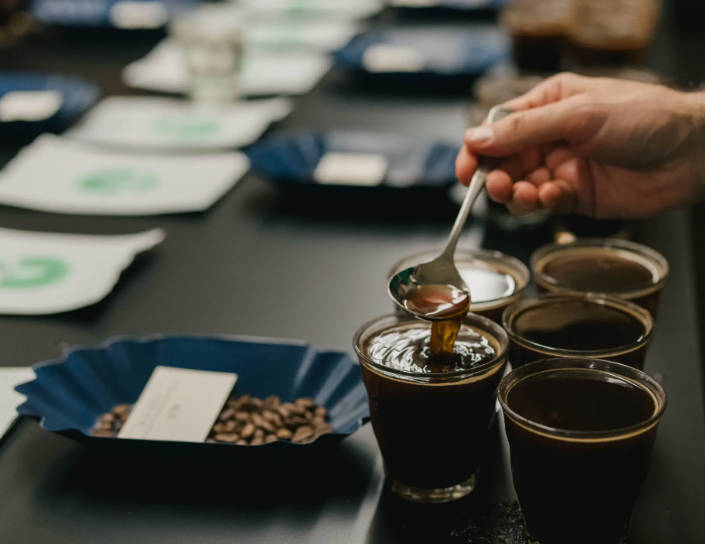
The fundamental challenge is that sensory perception is subjective and context-dependent. Two experienced tasters evaluating the same coffee under controlled conditions will often identify different descriptors—not because one is wrong, but because their reference libraries, attention patterns, and verbal associations differ. I have participated in cupping sessions where equally skilled professionals described the same coffee as 'citrus' versus 'tropical fruit' or 'caramel' versus 'brown sugar.' Both descriptions pointed toward the same sensory territory without achieving identical language.
This variability increases dramatically when moving from professional cupping conditions to consumer brewing environments. Professional evaluation uses standardized protocols—specific grind, water temperature, ratio, and steep time—designed to maximize consistency and reveal the coffee's characteristics clearly. Home brewing introduces variation in all these parameters, producing cups that may taste quite different from the evaluation samples. The tasting notes were accurate for how the professional evaluated the coffee; they may not describe what the consumer experiences at home.
Cultural and experiential differences further complicate interpretation. Flavor references assume shared experience with the reference foods. When I write 'bergamot,' I assume readers have tasted Earl Grey tea and can connect that reference to the aromatic compound I am describing. Readers without that experience find the reference meaningless. Regional fruit varieties, cooking traditions, and food exposure all shape what references communicate—or fail to communicate—across different consumer populations.
The specialty coffee industry's tasting note conventions have evolved toward increasingly specific and exotic references. Simple descriptors like 'nutty' or 'fruity' have given way to 'macadamia,' 'starfruit,' 'elderflower,' and 'lychee.' This evolution reflects both genuinely increasing palate sophistication among professionals and competitive pressure to differentiate products through distinctive language. The result is tasting notes that may be technically accurate but are practically useless for consumers unfamiliar with the references.
I have observed the disappointment cycle this creates. A consumer purchases a coffee described as featuring 'notes of jasmine, apricot, and Meyer lemon,' expecting to taste those flavors clearly in their morning cup. When their cup tastes like... coffee, they conclude either that their palate is inadequate or that the tasting notes were fabricated. Neither conclusion is accurate. The notes described real sensory characteristics that trained evaluation revealed; the consumer's brewing and perception simply did not access those characteristics in the same way.
The solution is not abandoning tasting notes but understanding them as directional cues rather than promises. When a note says 'citrus,' it indicates the coffee tends toward bright, acidic characteristics within the spectrum of coffee flavor—not that you will taste literal lemon juice. When it says 'chocolate,' it suggests deeper, rounder, less acidic character. Interpreting notes as pointing toward general flavor territories rather than specific taste experiences aligns expectations with reality.
Structural descriptors often communicate more reliably than specific flavor references. Terms like 'bright acidity,' 'full body,' 'clean finish,' or 'complex' describe coffee characteristics that consumers can perceive even without calibrated palates. I increasingly advocate for tasting note approaches that combine structural description with flavor reference—'bright and fruity with citrus character' communicates more usefully than 'Meyer lemon, mandarin, honeydew melon.'
Transparency about tasting note limitations builds trust rather than undermining it. Roasters who explain that notes represent their evaluation and that consumer experience may vary demonstrate honesty that ultimately strengthens customer relationships. The pretense that tasting notes are objective, reproducible facts creates expectations that inevitably disappoint.
For consumers seeking to develop their own tasting abilities, I recommend focused comparison rather than isolated evaluation. Brewing two different single origin coffees side by side reveals their relative characteristics more clearly than evaluating either alone. The comparison does not require identifying specific flavors—simply noticing which coffee is brighter, sweeter, or more complex builds palate awareness that eventually enables more specific perception.
The industry's competition scoring systems have driven some problematic tasting note practices. Competition scoring rewards identifying specific, unusual descriptors; judges who write 'strawberry' instead of generic 'fruit' demonstrate greater palate specificity. This incentive structure encourages precision that may exceed what the coffee actually supports, producing notes that describe what evaluators wanted to find rather than what was clearly present.
I have moved toward tasting note approaches that acknowledge uncertainty. Rather than definitive 'notes of X, Y, Z,' I prefer language like 'suggesting stone fruit and brown sugar' or 'tending toward citrus brightness.' This framing invites consumer exploration rather than setting rigid expectations. It also more honestly reflects the inherent subjectivity of sensory evaluation.
My conclusion is that tasting notes serve useful functions when understood appropriately—they communicate professional evaluation in language form, indicate general flavor direction, and distinguish coffees from each other. They fail when treated as guarantees of specific sensory experiences or tests of consumer palate adequacy. The path forward involves more realistic communication about what notes represent, structural descriptors that transcend specific reference points, and consumer education that builds confidence rather than inadequacy.
For consumers, I suggest treating tasting notes as conversation starters rather than contracts. Use them to select coffees that might align with your preferences, but allow your own experience to determine your evaluation. If a coffee described as 'fruity' tastes more 'nutty' to you, your perception is not wrong—it is simply different from the professional who wrote the notes. Developing your own flavor vocabulary, through attentive drinking and comparison, ultimately matters more than learning to perceive what someone else's notes describe.

Daniel Carter
Emma Johnson is a coffee expert with years of experience in brewing techniques, coffee culture, and the global coffee industry. She has extensive knowledge of coffee origins, roasting methods, equipment, and preparation practices, and regularly shares insights, guides, and tips to help enthusiasts and beginners enhance their coffee experience.
You Might Also Like
Comments
-
 Reply
ReplyDaniel Carter
Jun 23, 2025, 11:45 am
I’ve been experimenting with different brewing methods for a few months, and this guide really helped me understand the nuances between pour-over and French press. The tips on water temperature and grind size were especially useful. Thanks for sharing such a detailed article!
-
 Reply
ReplyRonda Otoole
Jun 23, 2025, 11:45 am
As a beginner, I often struggle with choosing the right coffee beans. This post broke down the flavor profiles clearly and gave practical advice on selecting beans based on taste preferences. I feel much more confident in my next purchase now.
 Reply
ReplyJames Whitley
Jun 23, 2025, 11:45 am
Loved the section about sustainable coffee practices! It’s great to see articles that not only focus on brewing but also educate readers on ethical sourcing and environmental impact. Definitely inspired me to try beans from local fair-trade roasters.
-
 Reply
ReplyKimberly Chretien
Jun 23, 2025, 11:45 am
I tried some of the latte art tips from this blog, and even though I’m still a beginner, my coffee looks way better now. The step-by-step instructions and real-world examples made it really easy to follow. Can’t wait to try more techniques!
-
 Reply
ReplyDaniel Carter
Jun 23, 2025, 11:45 am
I really appreciate how this post explains coffee concepts in a simple, approachable way. The breakdown of aroma, acidity, and body helped me understand why different coffees taste the way they do. It’s the kind of article I’ll come back to whenever I try a new bean.